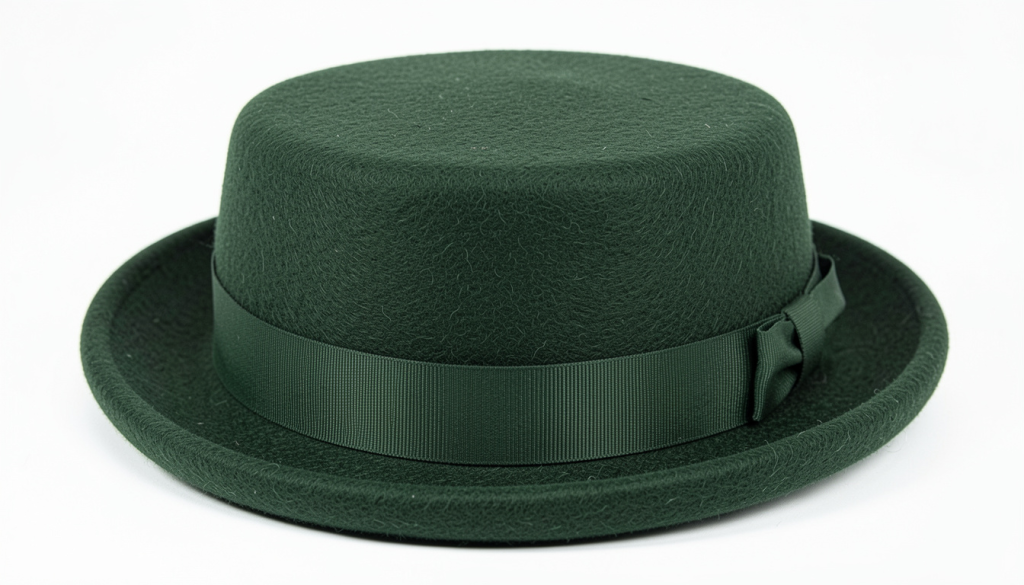
Few hats have held their shape, literally and culturally, as consistently as the pork pie. Its flat crown and snapped brim set it apart from every other style in the hat category, and its associations with jazz, ska, and cinema have given it a cultural weight that most accessories simply do not carry. For men looking to add a pork pie hat to their wardrobe today, understanding that history is useful. It explains why certain colourways have become dominant, why the hat reads the way it does in different settings, and what to look for when buying.
The Origins of the Pork Pie Hat in the 19th Century
The pork pie hat first appeared in Britain in the 1830s and 1840s. Its name came from the shape: a flat, round crown with a turned-up brim that bore a passing resemblance to a raised pie crust. In its earliest form, it was worn by women as a small, neat alternative to the bonnet styles that dominated the period.
By the latter half of the 19th century, the style had migrated to menswear. It became associated with cycling, outdoor pursuits, and the emerging middle-class leisure culture of the Victorian era. Buster Keaton, the American silent film actor, would later make the hat his signature in the 1920s and early 1930s, wearing a flat-crowned, hard felt version in almost every film he made. That association with Keaton gave the hat its first sustained moment of mainstream visibility.
The construction during this period was typically stiffened felt with a flat crown and a brim that was either left flat or turned up slightly all the way around. The ribbon band, which became a defining feature of later versions, was already present in most examples from this period.
Jazz, Blues, and the Cultural Rise of the Pork Pie Hat
The pork pie hat’s most significant cultural chapter began in American jazz and blues circles from the 1930s onwards. Musicians adopted it for practical and aesthetic reasons: it was compact, it stayed on comfortably during performances, and it projected a particular kind of cool that other hat styles did not. The men’s pork pie hat became shorthand for a certain kind of musical seriousness, a working hat for working musicians.
The Musicians Who Shaped the Pork Pie Hat’s Identity
Lester Young, the tenor saxophonist, is often credited with cementing the pork pie hat’s place in jazz culture. He wore one throughout the 1940s and 1950s and was so consistently associated with the style that it became part of his visual identity. Where other musicians wore fedoras or brimmed felt hats, Young’s pork pie stood out precisely because it was smaller, more angular, and less expected.
Thelonious Monk, another figure central to bebop jazz, also favoured pork pie hats and other unconventional headwear. His choices reinforced the hat’s association with the avant-garde and the independent-minded. By the mid-1950s, the pork pie had become established as a hat with genuine cultural meaning within jazz and, increasingly, within blues.
The hat’s appeal in these circles was not incidental. Jazz and blues musicians of the period were making deliberate choices about presentation. The pork pie hat communicated individuality within a genre that valued precisely that.
The Ska and Mod Revival of the 1960s and 1970s
When ska music arrived in Britain from Jamaica in the early 1960s, it brought the pork pie hat with it. Jamaican ska musicians had adopted the style from American jazz, and it crossed the Atlantic as part of a broader package of sounds, fashion, and attitude. The pork pie hats for men worn during this period tended to be in black or grey, often with a narrow ribbon band, and were typically worn at a slight angle.
The British skinhead and mod scenes of the late 1960s incorporated the pork pie hat into their own visual codes. It sat alongside Ben Sherman shirts, braces, and Dr Marten boots in the skinhead wardrobe, and its association with working-class youth culture gave it a harder edge than its jazz origins might have suggested.
The ska revival of the late 1970s and early 1980s brought the hat back into focus. Bands such as Madness and The Specials wore pork pie hats as a direct reference to the earlier Jamaican ska tradition, and in doing so introduced the style to a new generation of British music fans. The 2 Tone movement, which blended ska rhythms with punk energy, made the pork pie hat one of its most recognisable visual signatures.
How the Pork Pie Hat Crossed Into Mainstream Fashion
Outside of music, the pork pie hat found its way into cinema and television in ways that extended its reach considerably. The American crime drama Breaking Bad, which aired between 2008 and 2013, featured the protagonist wearing a black pork pie hat as a symbol of his transformation. For many viewers, this was their first substantial encounter with the style, and it drove a notable spike in interest.
That moment demonstrated something the hat had always possessed: an ability to signal a shift in character or attitude. The flat crown and defined brim give it a graphic quality that reads clearly on screen, which is part of why it has attracted costume designers across decades.
In British fashion, the pork pie hat has remained part of a relatively consistent smart-casual wardrobe for men who are comfortable with headwear. It does not follow seasonal trends in the way that baseball caps or bucket hats do. A well-made pork pie hat UK in wool felt will look as appropriate in five years as it does now, which is one of the reasons buyers return to it rather than treating it as a passing purchase.
What Makes a Well-Made Pork Pie Hat Worth the Investment
The construction details that separate a quality pork pie hat from a cheaper version are consistent across price points. A wool felt pork pie hat will hold its shape better than a synthetic equivalent, resist water to a reasonable degree, and age more gracefully. The flat crown, which defines the style, needs firm internal structure to maintain its profile across regular use.
Wool Felt, Leather, and Straw: Choosing the Right Material
Wool felt is the most versatile material for a pork pie hat and the one most closely associated with the hat’s musical heritage. It works across autumn and winter and into cooler spring days. A leather pork pie hat offers a harder edge and greater water resistance, which suits urban environments particularly well. Straw and paper straw versions are better suited to summer, though they are less structurally robust than felt.
The ribbon band is worth examining when buying. A grosgrain or petersham ribbon sewn cleanly around the base of the crown is a sign of considered construction. Some wide brim pork pie hat versions are available for buyers who want a slightly more dramatic profile, though the traditional pork pie brim is narrower than a fedora or trilby.
How to Wear a Pork Pie Hat with Confidence in the Modern Wardrobe
The grey pork pie hat and black remain the most popular colourways for a reason: they integrate with the widest range of clothing without requiring any particular effort. A black pork pie hat works with dark denim, a navy suit, a leather jacket, or a long overcoat. A grey version softens slightly and suits lighter neutrals and earth tones.
Wearing the hat straight rather than angled tends to read as more considered in most contexts. The angled look references the ska and mod traditions more directly and works well when the rest of the outfit is consistent with that reference. For everyday wear, a centred hat with a flat brim is easier to carry off without it looking costumey.
Face shape is worth considering. The flat crown of a pork pie adds height and creates a horizontal line at the top of the head. This works particularly well for oval and oblong face shapes. Rounder face shapes may find that the sharp geometry of the flat crown emphasises width rather than creating vertical interest. For those buyers, a men’s pork pie hat with a slightly wider brim can help balance proportions.
Frequently Asked Questions About Pork Pie Hat History and Styling
Where did the pork pie hat get its name?
The pork pie hat takes its name from the shape of a raised British pork pie. The flat crown and upturned brim create a silhouette that resembles the pastry crust of a traditional pork pie. The style first appeared in Britain in the 1830s and the name was in common use by the 1860s.
Which musicians are most associated with the pork pie hat?
Lester Young, the jazz saxophonist, is the most consistently cited figure in the hat’s musical history. Thelonious Monk also wore the style regularly. In ska and 2 Tone music, members of Madness and The Specials popularised the hat in Britain during the late 1970s and early 1980s.
Is the pork pie hat still fashionable for men?
The pork pie hat has remained a consistent choice in British menswear for several decades rather than fluctuating sharply with seasonal trends. It is not a fashion-forward hat in the way that some styles are, which is part of its appeal. A well-made pork pie hat UK in a neutral colour is a long-term addition to a wardrobe rather than something that dates quickly.
What is the difference between a pork pie hat and a trilby?
The pork pie hat has a flat crown with a crease running around the outer edge, whereas a trilby has a dented, teardrop-shaped crown. The brim of a pork pie is typically shorter and turns up all the way around, whilst a trilby brim turns up at the back and dips slightly at the front. The two styles carry different cultural associations: trilby hats for men are more closely associated with British fashion, whilst the pork pie draws more directly from American jazz and Jamaican ska traditions.
What colours are available in men’s pork pie hats?
Black and grey are the most widely available colours and the most practical for everyday wear. Brown, camel, and navy are also common and suit warmer or more casual wardrobes. Specialist retailers carry additional colourways including dark green, burgundy, and natural straw. The full range of pork pie hats for men at Novella Hats includes both seasonal and year-round options across multiple materials.
How should a pork pie hat fit?
A correctly fitted pork pie hat should sit level on the head approximately two finger-widths above the eyebrows, with the band making contact all the way around the head without pinching. The flat crown means there is less adjustment available than with a fedora, so getting the size right from the start matters more. Most suppliers offer a measurement guide based on head circumference in centimetres.
