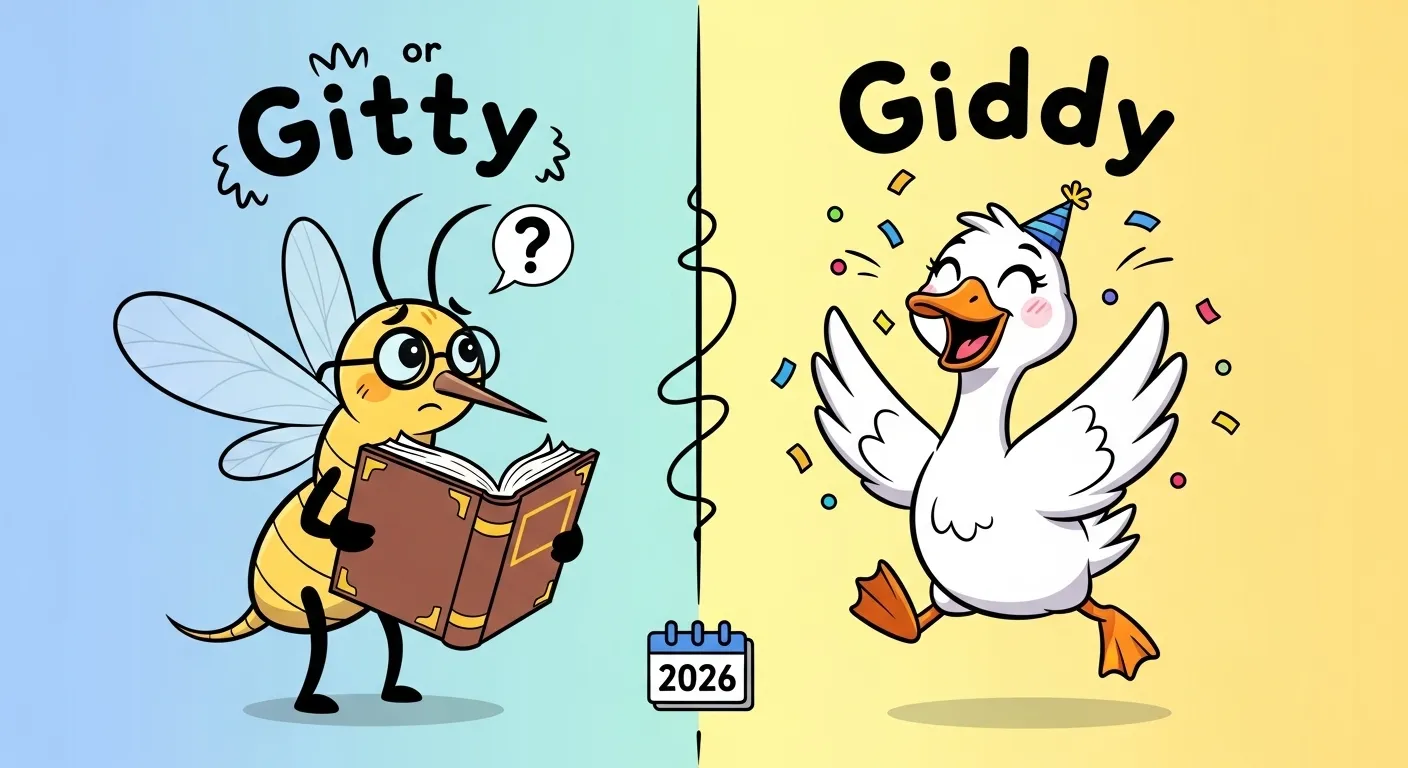
The correct spelling is giddy. “Gitty” is a misspelling and is not a standard English word.
You type a sentence like, “She felt so gitty with excitement,” and the spell checker marks it wrong. Now you pause and wonder should it be gitty or giddy? This is a common confusion, especially for learners, writers, and anyone posting online.
People search this keyword because the words look and sound similar. In fast typing or casual writing, giddy is often written as gitty by mistake. Many want to know the correct spelling before sending an email, writing an essay, or posting on social media.
This confusion matters because spelling errors can affect clarity and professionalism. Whether you are writing for school, work, or online content, using the right word builds trust and confidence.
This guide gives a quick answer, explains the word’s origin, shows real examples, and helps you use giddy correctly in everyday writing.
Gitty or Giddy – Quick Answer
The correct word is giddy.
Giddy means feeling excited, lightheaded, nervous, or very happy.
Examples:
- She felt giddy before the big event.
- The children were giddy with excitement.
Gitty is not a correct English word. It is a spelling mistake.
The Origin of Gitty or Giddy
The word giddy comes from Old English gidig, which meant mad, foolish, or dizzy. Over time, its meaning changed. Today, it describes strong excitement, nervous energy, or a spinning feeling.
In earlier English, spelling was not fixed. Words were written in many ways. But modern English has standardized spelling, and giddy became the accepted form.
The confusion with gitty happens because:
- The d sound can be soft in fast speech.
- Typing errors are common.
- Some people assume double t instead of double d.
However, dictionaries only recognize giddy.
British English vs American English Spelling
Unlike many English words, giddy has the same spelling in both British and American English. There is no regional variation.
| Region | Correct Spelling | Notes |
| American English | Giddy | Standard form |
| British English | Giddy | Same spelling |
| Australian/Canadian | Giddy | Same spelling |
| Incorrect Form | Gitty | Not accepted |
This makes it simple. No matter where you write, always use giddy.
Which Spelling Should You Use?
The answer is clear: always use giddy.
For US Audience
Use giddy in emails, reports, blogs, and social media.
For UK & Commonwealth
The spelling remains giddy. No changes needed.
For Global Writing
If your audience is international, giddy is the safest and correct choice everywhere.
Avoid gitty in:
- Professional writing
- Academic work
- Business communication
- Published content
Using the correct spelling shows attention to detail and strong language skills.
Common Mistakes with Gitty or Giddy
Here are frequent errors and how to fix them:
| Mistake | Correction |
| She felt gitty. | She felt giddy. |
| I am so gitty today. | I am so giddy today. |
| Gitty with joy | Giddy with joy |
Why mistakes happen:
- Fast typing
- Autocorrect issues
- Confusion with words like “kitty” or “pretty”
Tip:
Remember: Giddy = Double D for Dizzy.
Gitty or Giddy in Everyday Examples
Emails
- I’m giddy with excitement about the new project.
News Writing
- Fans were giddy after the team’s big win.
Social Media
- Feeling giddy after hearing the good news!
Formal Writing
- The announcement left the crowd giddy with anticipation.
Casual Conversation
- She was giddy before her first flight.
Using the correct spelling keeps your message clear and professional in any situation.
Gitty or Giddy – Google Trends & Usage Data
Search data shows that giddy is widely used across English-speaking countries. It appears frequently in:
- Lifestyle articles
- News stories
- Social media posts
- Educational content
Searches for “gitty” are much lower and usually come from people checking if the spelling is correct.
Popularity by region:
- United States – High usage
- United Kingdom – High usage
- Canada & Australia – Moderate to high
- Global learners – Common search for spelling clarification
This pattern shows strong user intent: people want to confirm the correct form. The data confirms that giddy is the only accepted spelling.
Comparison Table: Gitty vs Giddy
| Word | Correct? | Meaning | Usage |
| Giddy | Yes | Excited, dizzy, or overly happy | Standard English |
| Gitty | No | No meaning | Spelling mistake |
FAQs
1. Is gitty a real word?
No. Gitty is a misspelling. The correct word is giddy.
2. What does giddy mean?
It means very excited, nervous, happy, or lightheaded.
3. Is giddy used in formal writing?
Yes. It is acceptable in both formal and informal contexts.
4. Do British and American English spell it differently?
No. Both use the same spelling: giddy.
5. Why do people write gitty?
Usually due to typing errors or confusion with similar words.
6. Can giddy describe emotions?
Yes. It often describes excitement, joy, or nervous energy.
7. How can I remember the correct spelling?
Think: Giddy = Double D for Dizzy.
Conclusion
The confusion between gitty and giddy is common, but the solution is simple. Giddy is the correct and standard spelling, while gitty is only a mistake. The word has a long history and is used across all English-speaking regions without any spelling changes.
Today, giddy describes strong emotions like excitement, joy, or nervous energy. It appears in everyday conversation, professional writing, news, and social media. Because English spelling matters for clarity and credibility, using the correct form helps your writing look polished and trustworthy.
Whether you are writing an email, an academic paper, or online content, always choose giddy. Avoid common typing errors, check your spelling, and remember the simple rule: double d for the correct word.
With this knowledge, you can write confidently and avoid one of the most common spelling mistakes.
Upon or Apon: Which Spelling Is Correct? (2026)

I’m Laura M. Collins, and I specialize in writing clear explanations for confusing English words. I believe understanding small spelling differences can greatly improve written communication.