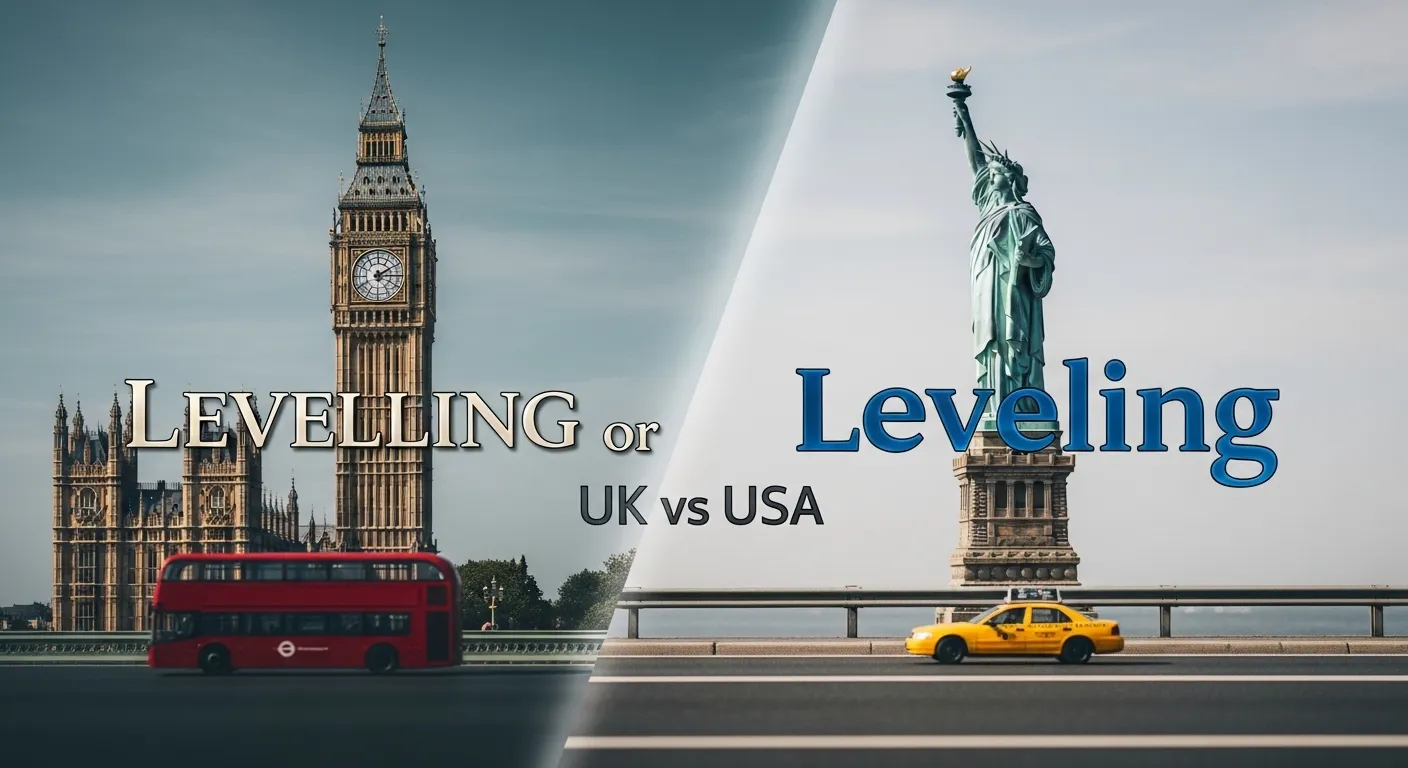
Both “levelling” and “leveling” are correct. Levelling is British English, while leveling is American English.
Thousands of people search for “levelling or leveling” because both spellings appear online, in books, and in professional writing. This creates confusion, especially for students, content writers, and professionals who want their English to look accurate and polished.
The confusion comes from a simple difference between British and American English spelling rules. Some words double the final letter in British English, while American English often keeps a single letter. Since English is used globally, both versions are widely accepted but choosing the right one depends on your audience.
This guide gives you a quick answer, explains the origin of the word, compares British and American usage, and shows real-life examples. By the end, you’ll know exactly when to use levelling and when to use leveling and you won’t second-guess your spelling again.
Levelling or Leveling – Quick Answer
Both spellings are correct, but they are used in different regions:
- Levelling → British English, Australian English, Canadian English
- Leveling → American English
Examples:
- British: The workers are levelling the ground.
- American: The crew is leveling the field.
The meaning is the same in both cases: making something flat, even, or balanced.
The Origin of Levelling or Leveling
The word level comes from the Old French word livelle, which means a tool used to make surfaces flat. The word entered English many centuries ago and kept its meaning related to balance, equality, and smooth surfaces.
When English spread across different countries, spelling rules began to change. British English followed traditional patterns, which often double the final consonant before adding a suffix. American English, influenced by spelling reforms, aimed to make words simpler and more consistent. This led to shorter forms like leveling instead of levelling.
The difference is not about correctness it is about spelling style based on region.
British English vs American English Spelling
The key difference comes from a rule about doubling the final consonant.
In British English:
- If a word ends with a vowel + consonant, the consonant is doubled before adding -ing or -ed.
- Example: travel → travelling, level → levelling
In American English:
- The final consonant is usually not doubled if the stress is not on the last syllable.
- Example: travel → traveling, level → leveling
Comparison Table
| Base Word | British English | American English |
| level | levelling | leveling |
| travel | travelling | traveling |
| cancel | cancelling | canceling |
| label | labelling | labeling |
This pattern explains why both spellings exist and why you see them used in different countries.
Which Spelling Should You Use?
The right spelling depends on your audience.
- Use “leveling” if your readers are in the United States or if you are writing for American companies, universities, or websites.
- Use “levelling” if your audience is in the UK, Australia, New Zealand, or many Commonwealth countries.
- For global audiences, choose one style and stay consistent throughout your content.
Consistency matters more than the choice itself. Mixing both spellings in the same document can look unprofessional.
Common Mistakes with Levelling or Leveling
Here are mistakes people often make:
1. Mixing styles
Wrong: The company is leveling the system and levelling the process.
Correct: Choose one style and keep it consistent.
2. Using the wrong version for your audience
American readers may see levelling as a spelling error, and British readers may think the same about leveling.
3. Misspelling the word
Common errors include:
- levelingg
- levellingg
- levling
4. Confusing meaning
Both spellings mean the same. There is no difference in definition only spelling style.
Levelling or Leveling in Everyday Examples
- US: We are leveling the platform before launch.
- UK: We are levelling the platform before launch.
Construction News
- The team is leveling the land for a new building.
- Workers are levelling the road after heavy rain.
Social Media
- Game update includes a faster leveling system.
- Players love the new levelling rewards.
Formal Writing
- The government is leveling economic differences.
- The policy aims at levelling social inequality.
In all cases, the meaning remains the same.
Levelling or Leveling – Google Trends & Usage Data
Search data shows clear regional patterns:
- Leveling is most popular in the United States.
- Levelling is commonly searched in the United Kingdom, Australia, and Canada.
- In gaming, construction, and tech industries, leveling dominates because many global platforms use American English.
- Academic and UK-based publications often prefer levelling.
For international websites and SEO content, American spelling often gets more global traffic. However, local businesses should always match their regional spelling.
Keyword Comparison Table
| Variation | Region | Popularity |
| leveling | United States | Very High |
| levelling | UK/Commonwealth | High |
| leveling system | Global (gaming/tech) | High |
| levelling ground | UK usage | Moderate |
FAQs
1. Is levelling correct?
Yes, it is the correct British English spelling.
2. Is leveling wrong?
No, it is the correct American English spelling.
3. Which spelling is more common worldwide?
Leveling is more common globally because many websites use American English.
4. Do levelling and leveling have different meanings?
No, both mean making something even, flat, or balanced.
5. Should I use levelling in academic writing?
Use it if your institution follows British English. Otherwise, follow your style guide.
6. Why does British English double the “l”?
British spelling rules often double the final consonant before adding suffixes.
7. Which spelling is used in gaming?
Most games use leveling because American English dominates the tech industry.
Conclusion
The difference between levelling and leveling is simple once you understand the rule. Both spellings are correct, and both carry the same meaning. The only difference is the region where each version is used. British and Commonwealth countries prefer levelling, while the United States uses leveling.
When writing, the most important thing is to match your audience and stay consistent. If you are creating content for a global platform, American spelling often works best. But if your readers are based in the UK or other Commonwealth regions, British spelling will feel more natural and professional.
Understanding small spelling differences like this helps improve clarity, builds trust with readers, and makes your writing look polished. Now that you know the difference, you can choose the right version with confidence and avoid common mistakes in both formal and everyday writing.
Buoy or Bouy: Correct Spelling Explained

I’m Daniel R. Whitmore, an English language writer who focuses on spelling differences, word comparisons, and everyday grammar clarity. I enjoy simplifying confusing English words so readers can write with confidence and accuracy.