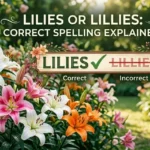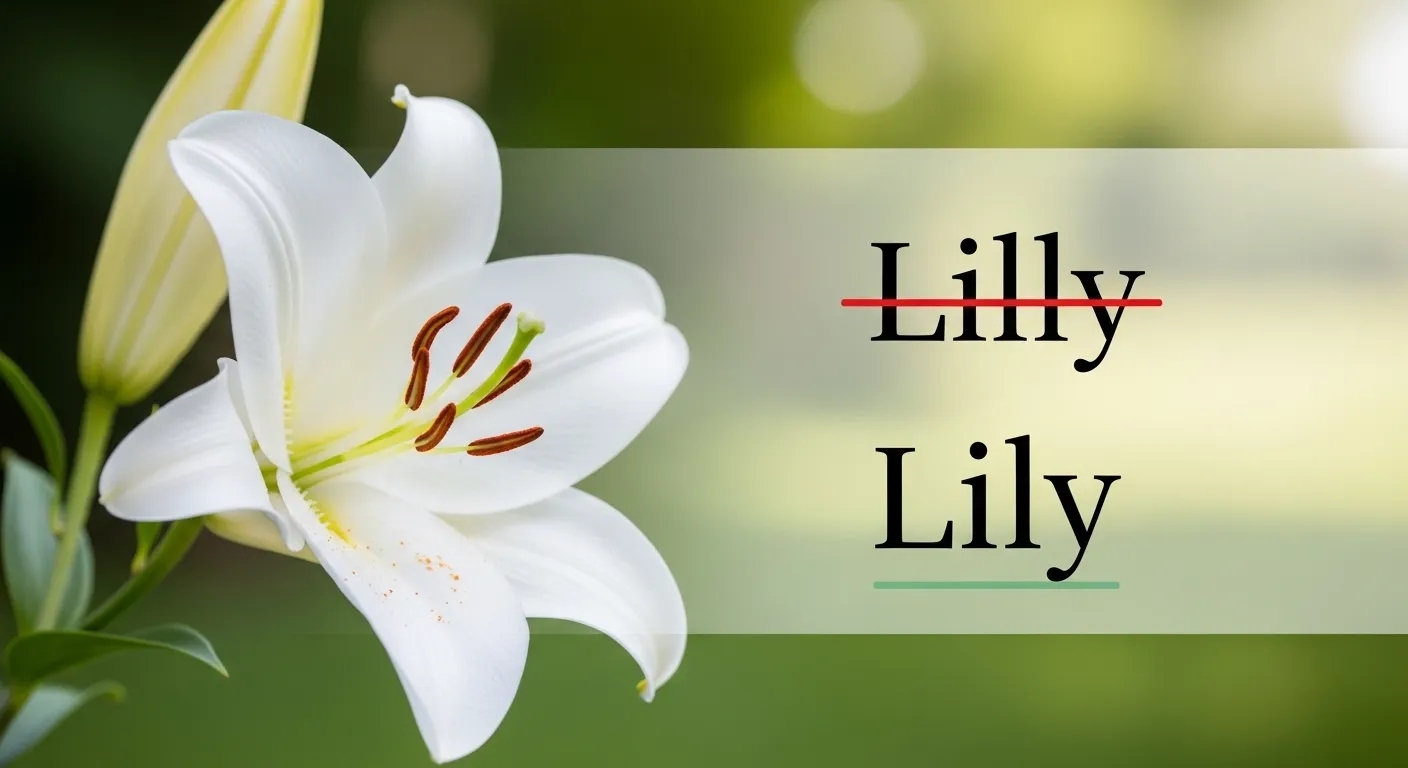
Use “lily” in almost all cases; “lilly” is usually incorrect.
Many people get confused between lilly or lily when writing names, poems, schoolwork, brand names, or captions on social media. The confusion happens because both spellings look correct at first glance, and English often allows double letters in words. This makes people pause and wonder which one is right.
People search for lilly or lily because they see both versions online. Some baby names, usernames, and surnames include Lilly, which adds to the confusion. Others simply hear the word spoken and guess the spelling.
This article clears up the confusion in a simple way. You will learn the correct spelling, meanings, origins, common mistakes, real-life examples, comparison tables, FAQs, and clear advice on when to use lily and when lilly might appear.
Lilly or Lily – Quick Answer
- Lily → ✅ Correct and standard spelling
- Lilly → ❌ Usually incorrect (rarely a surname)
Examples:
- The garden is full of lilies.
- Her name is Lily.
- ❌ The flower is called a lilly.
Meaning of Lily
Lily is both a noun and a proper name.
As a noun, it means:
- A type of flowering plant
- A symbol of purity and beauty
As a name, it means:
- A popular female given name
- Inspired by the flower
Examples:
- A white lily bloomed in spring.
- Lily won the award.
- The pond has water lilies.
Meaning of Lilly
Lilly is not the standard spelling of the flower or name.
It may appear as:
- A surname (for example, Eli Lilly)
- A brand or company name
- A personal name chosen by preference
Outside of these cases, lilly is considered a spelling mistake.
Origin of the Word Lily
The word lily comes from:
- Latin: lilium
- Greek: leírion
The spelling has remained lily for centuries. The plural form is lilies, not lillys.
The spelling lilly did not develop as a standard form of the word.
Why People Confuse Lilly and Lily
The confusion happens because:
- English has many double-letter words
- Names can have creative spellings
- Pronunciation sounds the same
Examples of double-letter confusion:
- Happy vs hapy
- Sunny vs suny
However, lily does not follow this pattern.
British English vs American English
There is no spelling difference here.
| English Type | Correct Spelling |
| British English | Lily |
| American English | Lily |
| Australian English | Lily |
| Canadian English | Lily |
Lilly is not a British or American variant.
Lilly vs Lily: Comparison Table
| Feature | Lily | Lilly |
| Correct spelling | ✅ Yes | ❌ Usually no |
| Flower name | Yes | No |
| Given name | Yes | Rare |
| Dictionary standard | Yes | No |
| Accepted globally | Yes | No |
Lily in Everyday Usage
Lily as a Flower
Examples:
- The lily smells sweet.
- Pink lilies grow here.
- A lily floats on the pond.
Lily as a Name
Examples:
- Lily is my sister.
- Lily wrote the article.
- I spoke with Lily today.
Lilly as a Name or Brand
Sometimes Lilly appears as:
- A family name
- A company name
- A chosen spelling for a child
Examples:
- Eli Lilly and Company
- Mr. John Lilly
These cases are exceptions, not general rules.
Common Mistakes with Lilly or Lily
Mistake 1: Spelling the flower as “lilly”
❌ A lilly blooms in spring
✅ A lily blooms in spring
Mistake 2: Writing the plural incorrectly
❌ lillys
✅ lilies
Mistake 3: Assuming “lilly” is a British spelling
❌ British English uses lilly
✅ British English uses lily
Lily vs Similar Words
Lily vs Tulip
- Lily → large, elegant flower
- Tulip → cup-shaped flower
Lily vs Rose
- Lily → symbol of purity
- Rose → symbol of love
Lily in Literature and Culture
The word lily appears often in:
- Poetry
- Religious texts
- Symbolic writing
Examples:
- Pure as a lily
- Lily-white skin
Writers prefer lily because it is traditional and recognized.
Lily in Religion and Symbolism
The lily symbolizes:
- Purity
- Innocence
- Renewal
It appears in:
- Christian art
- Mythology
- Cultural stories
The spelling is always lily, never lilly.
Lily in Everyday Examples
In Emails
- Please bring white lilies.
- Lily will join the meeting.
In News
- The lily festival begins today.
- Artist Lily won the prize.
On Social Media
- Loving these lilies 🌸
- Happy birthday, Lily!
In Formal Writing
- The lily represents purity.
- Lily authored the report.
Google Search and Usage Trends
Search data shows:
- “Lily” is searched far more often
- “Lilly” searches usually relate to names or brands
- Grammar searches correct “lilly” to “lily”
Search engines treat lilly as a spelling error in most contexts.
Lily in Baby Names
Lily is:
- A popular baby name
- Common in English-speaking countries
- Simple and traditional
Lilly may be chosen for:
- Unique spelling
- Family tradition
But standard spelling remains Lily.
How to Remember the Correct Spelling
Easy memory trick:
Think:
- One flower
- One L in the middle
Lily = L + I + L + Y
No extra letters needed.
Can Lilly Ever Be Correct?
Yes, but only when:
- It is a surname
- It is a brand name
- A person legally spells their name that way
In general writing, use lily.
Lily vs Lilly in SEO and Writing
For clear and professional writing:
- Always use lily for the flower
- Use lily for the name unless specified
- Avoid lilly unless it is a proper noun
Correct spelling builds trust.
Lily in Education and Exams
In exams:
- Lily is marked correct
- Lilly is marked wrong (unless a name)
Learning this helps avoid easy mistakes.
Lily in Global English
Across the world:
- Lily is standard
- Lilly is rare and specific
There is no major English dialect that prefers lilly.
FAQs: Lilly or Lily
1. Is “lilly” ever correct?
Only as a surname or brand name.
2. What is the correct spelling of the flower?
Lily
3. Is Lily a proper noun?
Yes, when used as a name.
4. Is Lilly a British spelling?
No.
5. What is the plural of lily?
Lilies
6. Can I name my child Lilly?
Yes, but it is a personal choice.
7. Which spelling is safer in writing?
Lily
Final Verdict
The difference between lilly or lily is clear once you understand the rules. Lily is the correct and standard spelling for the flower and the given name. Lilly is usually a mistake, except when used as a surname, brand, or chosen personal name.
If you want clear, correct, and professional English, always choose lily. Remember: one flower, one spelling. Using the right form keeps your writing accurate and confident.

I’m Daniel R. Whitmore, an English language writer who focuses on spelling differences, word comparisons, and everyday grammar clarity. I enjoy simplifying confusing English words so readers can write with confidence and accuracy.