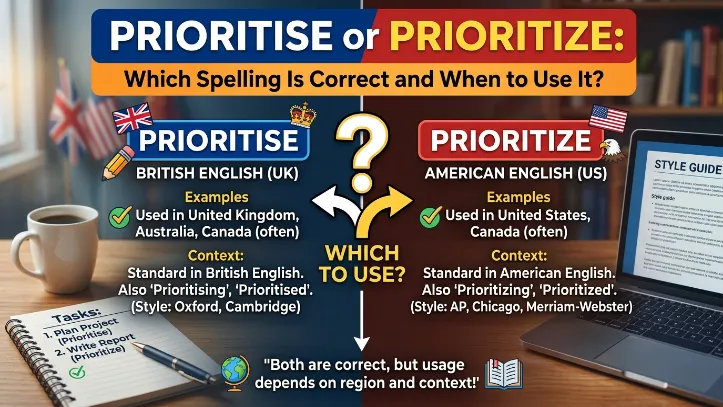
Both “prioritise” and “prioritize” are correct; “prioritize” is preferred in American English, while “prioritise” is standard in British English.
A project manager once told their team, “We need to prioritise tasks based on urgency.” A new team member asked if it should actually be spelled prioritize. This small doubt is common because the word has two accepted spellings depending on regional preferences.
English learners and writers often search for “prioritise or prioritize” because they want to write correctly in professional emails, reports, blogs, or articles. Using the wrong spelling can confuse readers or appear unprofessional, especially when writing for an international audience.
The truth is simple: both spellings are correct, but their usage depends on whether you follow British or American English. Understanding the difference helps writers maintain clarity and consistency in their content.
In this article, we will explore the meaning, origin, spelling differences, examples, and usage of prioritise and prioritize so you can confidently use the word in your writing.
Prioritise or Prioritize – Quick Answer
| Word | Correct? | Region | Meaning |
| Prioritize | ✔ | US English | To arrange or deal with in order of importance |
| Prioritise | ✔ | UK English | Same as above |
Example Sentences
American English:
- We need to prioritize urgent tasks first.
British English:
- We should prioritise customer requests in order of importance.
Both sentences convey the same meaning but follow different regional spelling conventions.
The Origin of Prioritise/Prioritize
The verb prioritize originates from the noun priority, which itself comes from the Latin word prior, meaning “earlier” or “first.”
- Priority → prioritize: To make something first or more important.
The British spelling convention changes the suffix -ize to -ise, which is why British English often uses prioritise.
Over time, the word spread globally, and spelling variations emerged depending on regional conventions.
British English vs American English Spelling
Comparison Table
| Word | US English | UK English | Notes |
| Prioritize | ✔ Standard | ✔ Accepted | Preferred in American English |
| Prioritise | ✖ Rare | ✔ Standard | Common in British English and Commonwealth countries |
In modern writing, it’s important to choose one style and remain consistent throughout your document.
Which Spelling Should You Use?
Use “Prioritize” When
- Writing for an American audience
- Creating technical, business, or digital content
- Following American English style guides (AP, Chicago, MLA)
Example:
- We need to prioritize deadlines for the new product launch.
Use “Prioritise” When
- Writing for a British or Commonwealth audience
- Following UK English style guides (Oxford, Cambridge)
Example:
- It is essential to prioritise tasks to meet project deadlines.
Common Mistakes with Prioritise and Prioritize
Mistake 1: Mixing Spellings
Incorrect:
- We need to prioritise the most urgent tasks and prioritize the rest.
Correct:
- We need to prioritize the most urgent tasks. (if American English)
- We need to prioritise the most urgent tasks. (if British English)
Consistency is key in professional writing.
Mistake 2: Confusing with “Priority”
Some writers mistakenly write prioritize when they mean priority.
Incorrect:
- We need to prioritize the priority of tasks.
Correct:
- We need to set priorities for the tasks.
Mistake 3: Using One Style in Mixed Audience
For international audiences, it’s best to choose one spelling style to avoid confusion.
Prioritise/Prioritize in Everyday Examples
In Business
- The manager asked the team to prioritize urgent projects.
In Technology
- Developers need to prioritise bug fixes according to severity.
In Education
- Students should prioritize assignments based on deadlines.
In Personal Productivity
- Learn to prioritize tasks to manage your time effectively.
Google Trends & Usage Data
Search trends indicate:
- Prioritize dominates in American websites, corporate emails, and online guides.
- Prioritise appears mainly in British or Commonwealth contexts.
- Global content writers often prefer prioritize for SEO and international readability.
This confirms that prioritize is the preferred spelling for modern online writing, but prioritise remains correct in UK contexts.
Comparison Table: Prioritize vs Prioritise
| Feature | Prioritize | Prioritise |
| Meaning | Same | Same |
| US English | ✔ Preferred | ✖ Rare |
| UK English | ✔ Accepted | ✔ Preferred |
| Modern usage | Very common | Less common internationally |
| SEO/online writing | High | Moderate |
FAQs
1. Are “prioritise” and “prioritize” both correct?
Yes. Both are correct; choice depends on regional spelling preference.
2. Which spelling is preferred in American English?
Prioritize is preferred.
3. Which spelling is preferred in British English?
Prioritise is standard.
4. Do they have different meanings?
No. Both mean to arrange or deal with something in order of importance.
5. Can I use either spelling in international writing?
Yes, but consistency is important. Choose one style per document.
6. Is “prioritize” used in formal writing?
Yes, it’s commonly used in business, academic, and digital content.
7. Does “prioritise” appear in SEO content?
Yes, especially for UK audiences, but “prioritize” performs better globally.
Conclusion
The choice between prioritise and prioritize is simple once you know your audience. Both spellings are correct, and their meanings are identical.
- Use prioritize for American English and modern online content.
- Use prioritise for British English or traditional Commonwealth writing.
Being consistent with your chosen style ensures professional, clear, and credible writing. Understanding this small but important difference makes your content more polished, whether it’s a blog post, business report, or academic article.
Remember: prioritize for the US, prioritise for the UK, but always keep your writing consistent.
Background or Backround: Which Spelling Is Correct?

I’m Laura M. Collins, and I specialize in writing clear explanations for confusing English words. I believe understanding small spelling differences can greatly improve written communication.