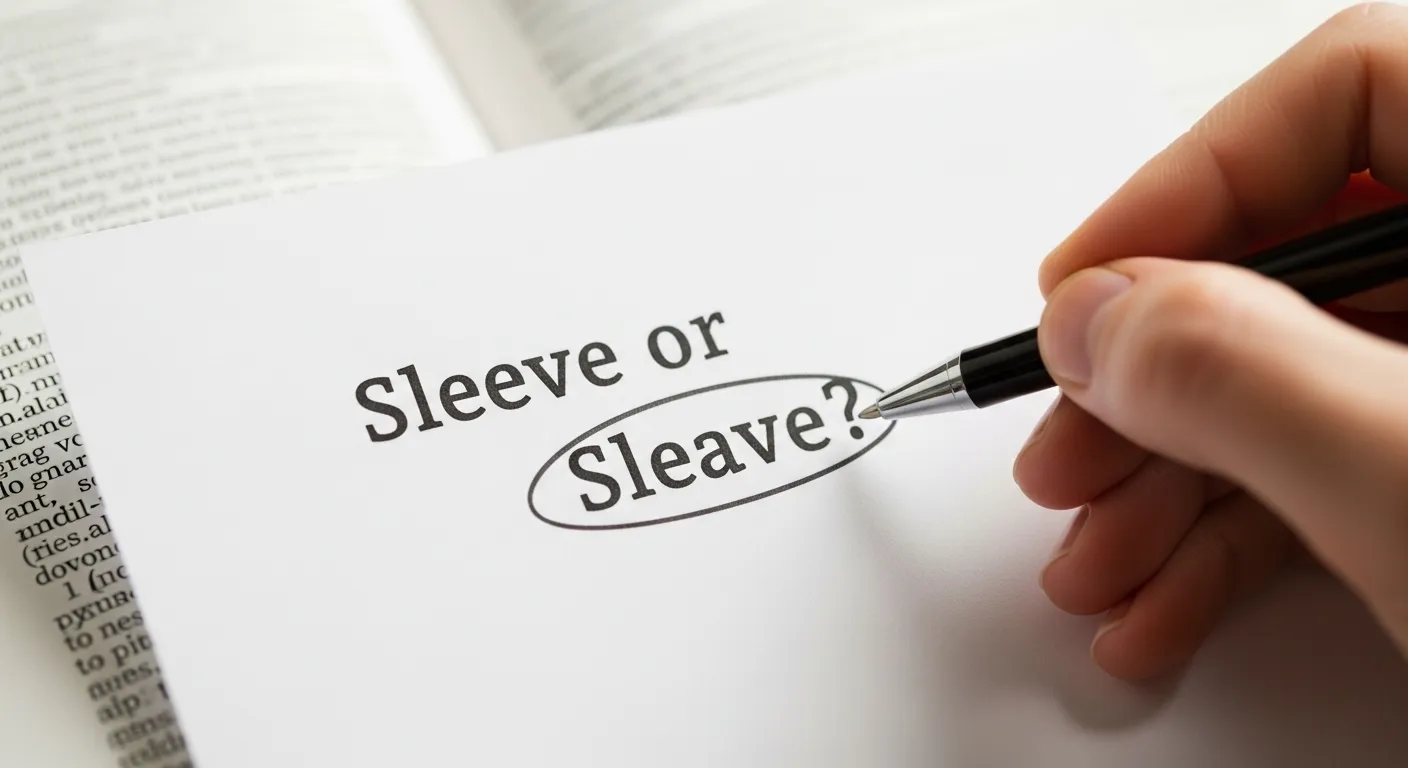
Sleeve is the correct spelling. Sleave is a rare or outdated word and is not used for clothing. Always use sleeve when referring to the part of a garment that covers the arm.
Have you ever typed sleave instead of sleeve and wondered if it was correct? You’re not alone. Many people search for “sleeve or sleave” because the words sound the same. English spelling can be tricky, especially when a long “ee” sound can be written in different ways.
This confusion often happens while writing emails, product descriptions, school work, or social media posts. Since sleeve is a common word in fashion, tailoring, sports, and everyday conversation, using the wrong spelling can look unprofessional. Searchers want a quick answer, but they also want to know why the mistake happens and which version is correct in British and American English.
This guide clears the confusion. You’ll learn the correct spelling, the origin of the word, regional usage, common mistakes, and real-life examples. By the end, you’ll know exactly when and how to use sleeve with confidence.
Sleeve or Sleave – Quick Answer
The correct spelling is sleeve.
Meaning:
The part of a shirt, jacket, or dress that covers the arm.
Examples:
- She rolled up her sleeves before starting work.
- The jacket has long sleeves.
- He kept a pen in his shirt sleeve.
Sleave is not a correct spelling for clothing. It is an old or rare word that most people never use today.
The Origin of Sleeve or Sleave
The word sleeve comes from Old English slēfe, which meant a garment covering the arm. Over time, the spelling changed, but the long “ee” sound stayed the same.
English often uses “ee” to show a long vowel sound, as in:
- Keep
- Green
- Feel
- Sleeve
The confusion happens because English also uses “ea” or “e” for similar sounds. Some people assume sleave follows the same pattern. However, modern English kept sleeve as the standard spelling.
The word sleave does exist in literature. It appeared in very old texts and meant a loose thread or silk fiber. This meaning is rare and not related to clothing sleeves.
Today, in modern English, sleeve is the only correct and accepted spelling for everyday use.
British English vs American English Spelling
Unlike many English words, sleeve has the same spelling in both British and American English. There is no regional variation.
| Version | British English | American English | Correct Today |
| Sleeve | ✓ | ✓ | Yes |
| Sleave | ✗ | ✗ | No |
Examples:
- UK: The jumper has short sleeves.
- US: This shirt has rolled sleeves.
Since there is no difference between regions, you can safely use sleeve worldwide.
Which Spelling Should You Use?
Always use sleeve, no matter your audience.
For US readers: Use sleeve
For UK or Commonwealth readers: Use sleeve
For global content: Use sleeve
Using sleave can:
- Look like a spelling mistake
- Reduce trust in professional writing
- Affect SEO or product searches
- Confuse readers
If you write blogs, fashion content, product listings, or academic work, stick with sleeve every time.
Common Mistakes with Sleeve or Sleave
Here are the most common errors people make:
1. Writing “sleave” instead of sleeve
❌ The shirt has long sleaves.
✅ The shirt has long sleeves.
2. Plural confusion
❌ Sleaves
✅ Sleeves
3. Typing errors in product listings
Wrong spelling can affect search results and customer trust.
4. Assuming it’s a regional difference
There is no British or American variation.
5. Mixing pronunciation and spelling
Because the word sounds simple, people guess the spelling.
Sleeve or Sleave in Everyday Examples
Emails
- Please check the sleeve length before shipping.
- The uniform needs shorter sleeves.
News
- The team wore black armbands on their sleeves.
Social Media
- Loving this dress with puff sleeves!
- Rolled my sleeves and got the work done.
Formal Writing
- The garment features detachable sleeves.
- Protective sleeves were used for the equipment.
Sleeve or Sleave – Google Trends & Usage Data
Search data shows that “sleeve” is widely used worldwide. It is popular in:
- United States
- United Kingdom
- Canada
- Australia
- India
Common search contexts:
- Clothing and fashion
- Sports arm sleeves
- Laptop sleeves
- Tattoo sleeves
- Product descriptions
The search term “sleeve or sleave” appears because people want to confirm the correct spelling. However, real usage strongly favors sleeve. The word sleave has almost no modern search demand and appears mainly in historical or literary references.
For SEO, using the correct spelling improves visibility and trust.
Comparison Table: Sleeve vs Sleave
| Word | Meaning | Usage Today | Correct for Clothing |
| Sleeve | Arm part of a garment | Common | Yes |
| Sleave | Old word for loose thread | Rare/obsolete | No |
FAQs
1. Is sleave a correct spelling?
No. Sleave is outdated and not used for clothing.
2. What is the correct spelling: sleeve or sleave?
The correct spelling is sleeve.
3. Is there a British vs American difference?
No. Both use sleeve.
4. Why do people write sleave?
Because the long “ee” sound can be confusing in English spelling.
5. What is the plural of sleeve?
The plural is sleeves.
6. Is sleave used anywhere today?
Only in rare historical or literary contexts.
7. Which spelling should I use for SEO or business writing?
Always use sleeve.
Conclusion
The confusion between sleeve or sleave comes from English pronunciation, but the rule is simple. Sleeve is the correct and standard spelling. It is used in British English, American English, and worldwide. The alternative form, sleave, is outdated and not used in modern writing.
Using the correct spelling matters. It improves clarity, builds trust, and helps your content perform better in search results. Whether you are writing emails, product descriptions, blogs, or social media posts, always choose sleeve. There is no regional difference and no special case where sleave should replace it.
If you remember one thing, remember this: when you talk about clothing, fashion, or arm coverings, the correct word is always sleeve. Simple spelling leads to clear and professional communication.
Levelling or Leveling: Which Spelling Is Correct?UK vs USA

I’m Emily K. Dawson, and I write about commonly confused English words and spelling mistakes. My goal is to make English easier for learners by explaining grammar in a simple, practical way.