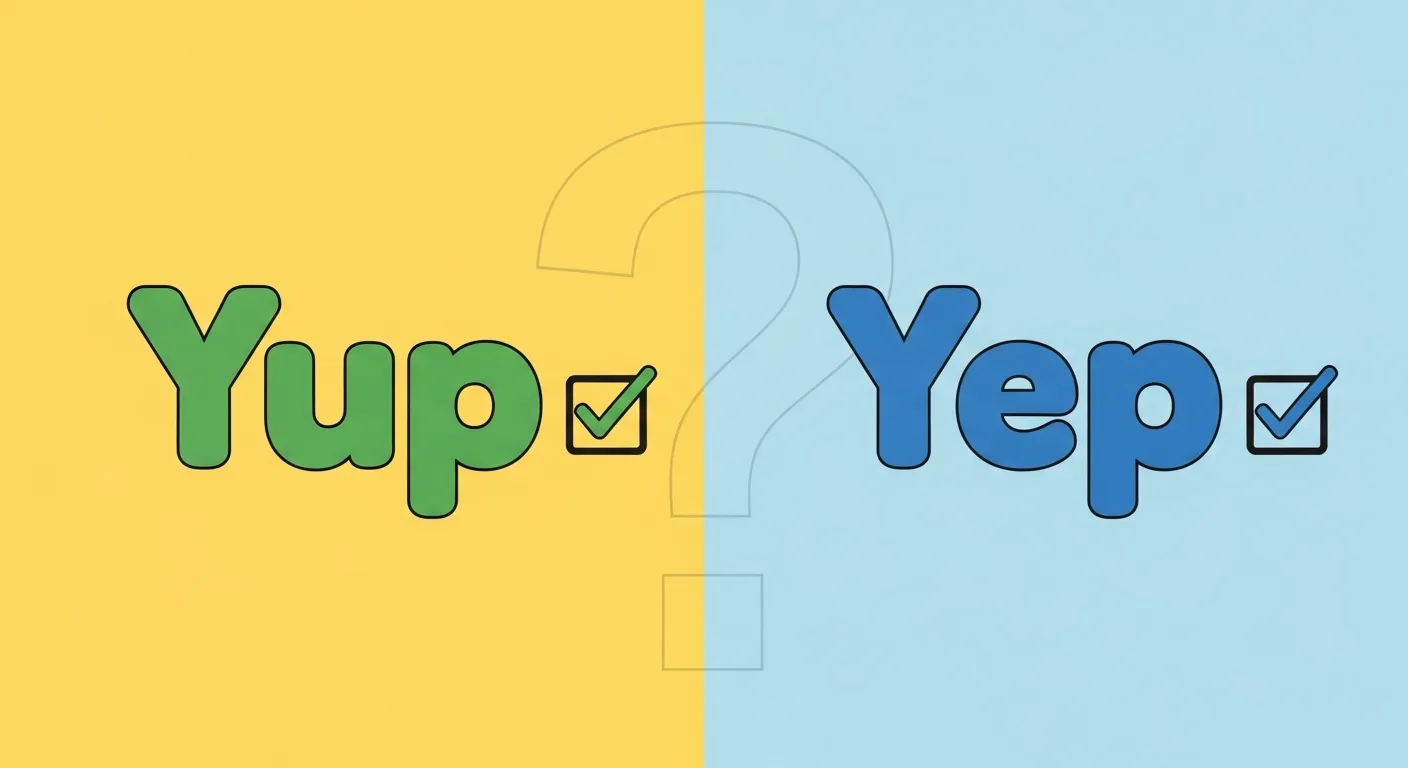
Both “yup” and “yep” mean yes; “yep” sounds friendlier, while “yup” can sound casual or neutral.
Many people pause when choosing between yup and yep. Both words are informal ways to say “yes,” both appear in chats and social media, and both are widely understood. So why do people search for yup or yep?
The confusion happens because English has many informal words that depend more on tone than strict grammar rules. Unlike formal words, casual expressions change meaning based on context, voice, and situation. A single word like “yup” or “yep” can sound friendly, relaxed, or even slightly uninterested depending on how it is used.
In this article, you’ll learn the clear difference between yup and yep, their origin, how Americans and British speakers use them, common mistakes, real-life examples, tone differences, usage advice, FAQs, and when to choose one over the other.
Yup or Yep – Quick Answer
- Yep → ✅ Friendly, positive, conversational
- Yup → ✅ Casual, neutral, sometimes brief
Simple Examples
- “Are you coming?” Yep!
- “Did you finish?” Yup.
Both mean yes, but the feeling is different.
The Origin of Yup or Yep
Both yup and yep come from the word yes. Over time, English speakers shortened “yes” to sound more relaxed and natural in speech.
- Yep appeared earlier and became popular in casual conversation.
- Yup developed later as an even shorter, looser variation.
Neither word has a formal dictionary origin like Latin or Greek words. Instead, they grew naturally through spoken English and everyday use.
British English vs American English Usage
There is no spelling difference, but usage patterns vary slightly.
| Word | British English | American English |
| Yep | Common | Very common |
| Yup | Common | Very common |
In both UK and US English, yep is slightly more polite in tone.
Which One Should You Use?
Your choice depends on tone, not correctness.
Use yep when:
- You want to sound friendly
- You are replying politely
- You are chatting casually but positively
Examples:
- “Can you help?” Yep, sure!
- “Is this correct?” Yep.
Use yup when:
- You want a quick, relaxed reply
- You are being neutral or brief
- You are texting informally
Examples:
- “You done?” Yup.
- “Same plan?” Yup.
Tone Difference: Yup vs Yep
This is where most confusion happens.
- Yep → warmer, more open
- Yup → cooler, shorter
Neither is rude by default. Tone comes from context.
Example Comparison
- “Thanks for helping!” Yep! (sounds friendly)
- “Thanks for helping.” Yup. (sounds neutral)
Common Mistakes with Yup or Yep
Mistake 1: Using them in formal writing
❌ Yup, I agree with the report
✅ Yes, I agree with the report
Mistake 2: Thinking one is wrong
❌ Yup is incorrect English
✅ Both are correct informal English
Mistake 3: Misreading tone
❌ Assuming “yup” is rude
✅ Tone depends on context
Yup or Yep in Everyday Examples
Text Messages
- “Are you free?” Yep
- “Same place?” Yup
Emails (Informal)
- Yep, that works for me.
- Yup, I’ll send it soon.
Social Media
- Yep, totally agree.
- Yup, been there.
Spoken English
- “Is it ready?” Yep!
- “All good?” Yup.
Yup or Yep – Google Trends & Usage Data
Search behavior shows:
- Yep is slightly more common overall
- Yup appears often in casual and short replies
- Both words are popular in messaging and chat apps
Neither word is suitable for SEO-heavy or formal content, but both are common in conversational writing.
Comparison Table: Yup vs Yep
| Aspect | Yup | Yep |
| Meaning | Yes | Yes |
| Tone | Neutral / casual | Friendly / positive |
| Formal writing | No | No |
| Texting | Yes | Yes |
| Politeness level | Medium | Slightly higher |
Yup, Yep, and Yes: What’s the Difference?
| Word | Formality | Tone |
| Yes | Formal | Neutral |
| Yep | Informal | Friendly |
| Yup | Informal | Casual |
If in doubt, yes is always the safest option.
Cultural Use and Context
In spoken English:
- Yep is common in customer service and friendly chats
- Yup is common among friends and peers
In writing:
- Avoid both in academic or professional documents
- Use them only in dialogue, comments, or informal content
FAQs: Yup or Yep
1. Are yup and yep real words?
Yes. Both are accepted informal words.
2. Is yup rude?
No. It can sound neutral but not rude by default.
3. Is yep more polite than yup?
Slightly, yes.
4. Can I use yup in emails?
Only in very casual emails.
5. Are these words used worldwide?
Yes, mainly in English-speaking countries.
6. Which is more common?
“Yep” is slightly more common.
7. Should I avoid them in formal writing?
Yes. Use “yes” instead.
Conclusion
The difference between yup and yep is not about correctness but tone. Both words mean “yes,” both are informal, and both are widely understood. Yep often sounds warmer and more positive, while yup feels relaxed and neutral.
When writing or speaking casually, choose the word that fits your tone and situation. If you want to sound friendly, go with yep. If you want a quick, casual reply, yup works fine. In formal situations, always choose yes.
Understanding these small tone differences helps your English sound more natural and confident.
Flavor or Flavour: Difference, Meaning, and Usage ✅

I’m Daniel R. Whitmore, an English language writer who focuses on spelling differences, word comparisons, and everyday grammar clarity. I enjoy simplifying confusing English words so readers can write with confidence and accuracy.