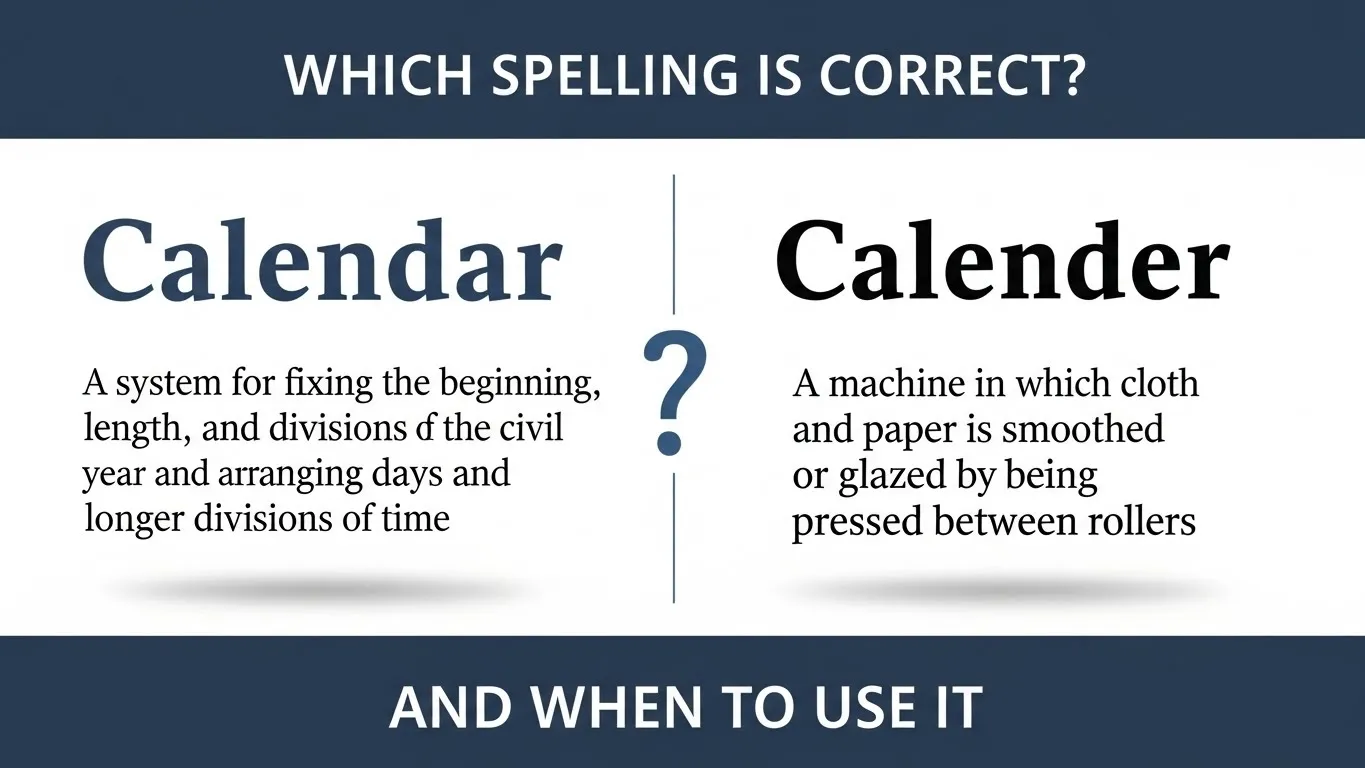
Have you ever typed “calender” instead of “calendar” and wondered if it’s correct? Many people search for “calendar or calender” because English spelling can be confusing. These two words look almost identical, but they mean very different things. Using the wrong one in emails, documents, or social media posts can make you appear careless or confuse your readers.
A calendar is a system that organizes days, months, and years, helping you schedule events, holidays, or appointments. A calender, on the other hand, is a less common word used mainly in industries like paper or textiles, referring to a machine that presses or smooths materials. Understanding the difference is important for clear communication. This guide will give you a quick answer, explain origins, show examples, compare British and American spelling, and provide advice on which to use in different contexts. By the end, you’ll never mix these up again.
Calendar or Calender – Quick Answer
The short and simple answer:
- Calendar ✅ → Correct for general use, schedules, digital or paper planners.
- Calender ❌ → Rare, technical term in manufacturing or textiles.
Example sentences:
- I marked my meetings on the calendar.
- The factory uses a calender to smooth the paper sheets.
Most people searching for “calendar or calender” are looking for the correct spelling for everyday use, and the answer is almost always calendar.
The Origin of Calendar and Calender
Understanding where these words come from helps explain why they are so easily confused.
- Calendar: From the Latin word calendarium, meaning “account book” or “register.” The Romans used it to mark the “calends,” the first day of each month. Over time, calendar became the standard word for systems that organize days and months.
- Calender: This comes from the French word calandre, meaning “roller.” It entered English in the 18th century as an industrial term, referring to machines used to smooth fabrics, paper, or other materials.
The origins show why calendar is used in everyday life and calender in technical or manufacturing contexts. Confusing them is common because they sound almost identical, but context is the key.
British English vs American English Spelling
When it comes to calendar or calender, spelling does not significantly differ between British and American English for calendar. Both versions use calendar for general use. The word calender is rarely used outside industrial contexts.
| Feature | British English | American English |
| General date system | Calendar | Calendar |
| Industrial machine | Calender | Calender |
| Common use | Calendar | Calendar |
| Confusion risk | Medium | Medium |
Key takeaway: Both UK and US English use calendar for schedules. If you use calender outside industry-specific contexts, it will usually be considered a spelling mistake.
Which Spelling Should You Use?
Here’s a simple guide:
- General writing, emails, social media, and schoolwork: Always use calendar.
- Technical or industrial writing (paper mills, textile factories): Use calender only when referring to machinery.
- US audience: Calendar for all non-technical uses.
- UK/Commonwealth: Same rule – calendar for everyday use.
In short, 99% of the time, calendar is correct. Calender is extremely rare and industry-specific.
Common Mistakes with Calendar or Calender
Many errors occur because people type what they hear, not what they read. Here are the most frequent mistakes:
| Mistake | Correct Form | Note |
| I’ll check my calender for next week. | I’ll check my calendar for next week. | Everyday scheduling |
| The paper passed through the calendar. | The paper passed through the calender. | Industrial process |
| Setting up a calender invite. | Setting up a calendar invite. | Digital meetings |
| Forgot to mark the calender. | Forgot to mark the calendar. | General usage |
Tip: If it’s about dates or schedules, always choose calendar.
Calendar or Calender in Everyday Examples
Here are examples of correct usage in different contexts:
Emails:
- “Please check the calendar for available meeting slots.”
News:
- “The festival appears on the annual calendar of events.”
Social media:
- “Mark your dates on the calendar and join the live webinar!”
Formal writing:
- “The school calendar for the academic year has been released.”
Technical/Industrial writing:
- “The calender machine smooths the paper before cutting.”
Calendar or Calender – Google Trends & Usage Data
Search trends indicate that calendar dominates general searches. Here’s a quick summary:
- United States: Overwhelming preference for calendar, nearly 95% of searches.
- United Kingdom & Commonwealth: Same trend, though searches for “calender” occasionally appear in industrial contexts.
- Global search volume: Calendar far exceeds calender in non-technical contexts.
Insight: The confusion mostly arises from phonetic spelling mistakes, not regional differences.
Comparison Table: Calendar vs Calender
| Feature | Calendar | Calender |
| Definition | System for days, months, years | Industrial machine for smoothing materials |
| Common use | Everyday life, school, office, digital apps | Paper or textile manufacturing |
| Spelling correctness | ✅ Correct | ✅ Correct only in industrial context |
| Frequency | Very high | Very low |
| UK vs US | Same | Same |
| Pronunciation | /ˈkæl.ən.dər/ | /ˈkæl.ən.dər/ (almost identical) |
FAQs
1. Can I use calender instead of calendar in emails?
No. Emails and digital communication should always use calendar unless referring to machinery.
2. Is calender ever correct?
Yes, but only in industrial or technical contexts such as paper or textile processing.
3. Why do people confuse calendar and calender?
They sound identical and differ only by one vowel. Lack of awareness causes mistakes.
4. Does spelling differ in British and American English?
No. Both versions use calendar for general use and calender only in industry.
5. How do I remember the difference?
Think “calendar = dates, calender = machine.” If it tracks time, it’s calendar.
6. Can “calendar” refer to machinery?
No. Machinery is always calender in technical writing.
7. Is using calender in social media posts acceptable?
No. It’s a spelling mistake in general posts. Use calendar.
Conclusion
Understanding the difference between calendar and calender is simple once you know the context. Calendar is used for dates, schedules, and digital apps, making it the correct spelling in nearly all everyday situations. Calender is an industrial term for machines used in paper and textile manufacturing.
By keeping the context in mind and remembering the small spelling difference, you can avoid common errors and maintain professional communication. Whether you’re writing emails, planning events, or creating content for social media, calendar is almost always your safe choice. The rare exception is technical writing in specialized industries. Checking the word origin, usage trends, and examples helps reinforce the correct spelling. In short, when in doubt, choose calendar for everyday life—it’s universally understood and correct in both British and American English.
Using the correct word not only improves your credibility but also ensures your readers understand your message without confusion. Next time you plan meetings, post online, or write a report, you’ll confidently know the difference between calendar and calender.
Liter or Litre: Which Spelling Is Correct? advice for US&UK writing

I’m Laura M. Collins, and I specialize in writing clear explanations for confusing English words. I believe understanding small spelling differences can greatly improve written communication.