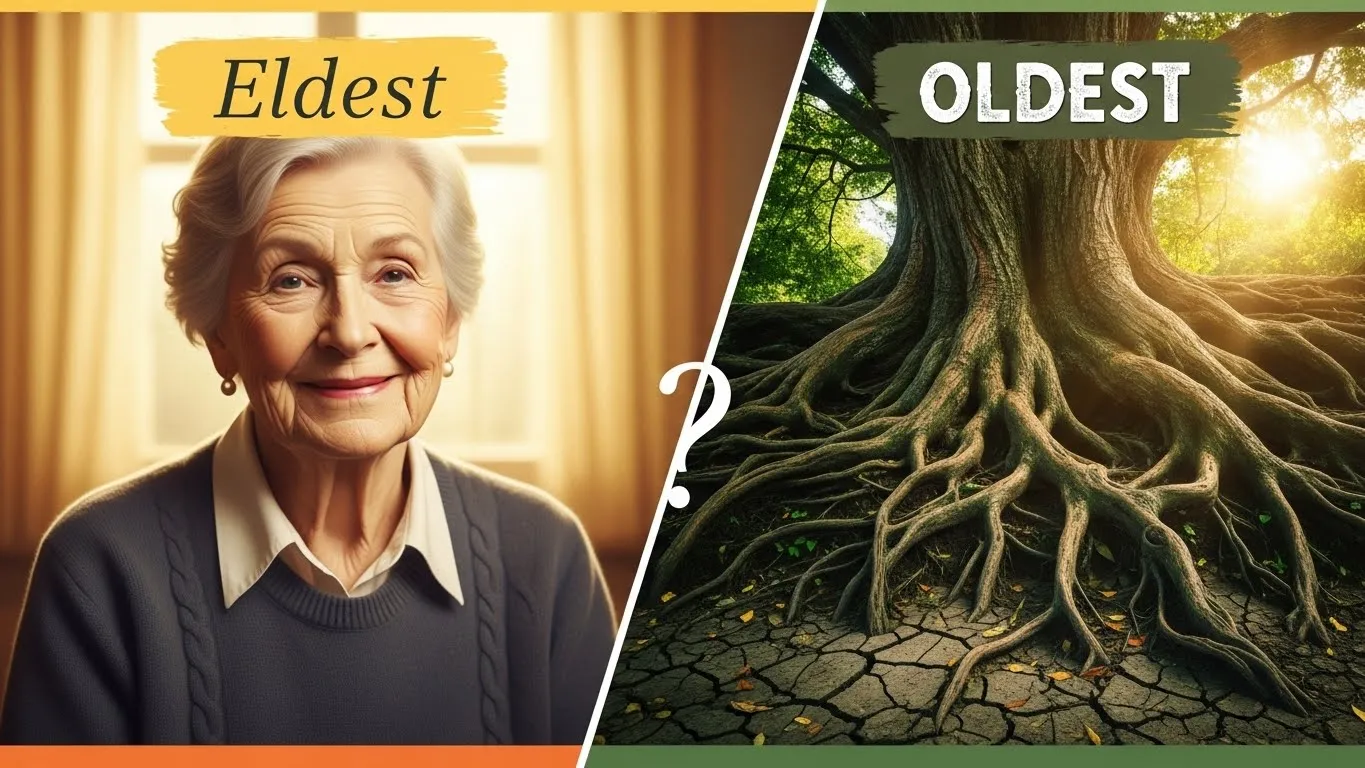
Many English learners and even native speakers often pause when choosing between eldest or oldest. At first glance, both words seem to mean the same thing: someone who has lived the longest. So why does English have two options? And more importantly, which one should you use and when?
People search for “eldest or oldest” because the difference is subtle but important. Using the wrong word can make a sentence sound unnatural, unclear, or grammatically incorrect—especially in formal writing, family descriptions, school essays, or news articles. This confusion is common in global English, where British and American usage often overlaps.
The good news is that the rule is simple once you understand it. This article gives you a quick answer, clear examples, and practical guidance for everyday use. You’ll learn the origin of both words, how British and American English treat them, common mistakes to avoid, and how Google usage trends compare. By the end, you’ll know exactly which word to choose—every time.
Eldest or Oldest – Quick Answer
Oldest is used for people, animals, or things in general.
Eldest is mainly used for people within a family.
Examples:
- She is the oldest student in the class.
- He is the eldest son of the family.
- This is the oldest building in the city.
👉 Rule to remember:
If it’s about family relationships, use eldest. Otherwise, use oldest.
The Origin of Eldest or Oldest
Both eldest and oldest come from the Old English word eald, meaning “old.”
Over time, English developed special forms for comparison.
- Old → Older → Oldest
- Old → Elder → Eldest
Historically, elder/eldest became linked to family rank and social roles, especially when talking about siblings. Older/oldest stayed more general and flexible.
There is no spelling difference, only a usage difference. The confusion exists because modern English still keeps both forms, even though their meanings are close.
British English vs American English Spelling
There is no spelling difference between British and American English for eldest and oldest. The difference is only in usage preference.
| Context | British English | American English |
| Family (siblings) | Eldest | Eldest |
| General age | Oldest | Oldest |
| Objects & places | Oldest | Oldest |
| Formal writing | Eldest (family) | Eldest (family) |
✅ Both varieties follow the same rules.
Which Spelling Should You Use?
- US audience:
Use eldest for family, oldest for everything else. - UK/Commonwealth audience:
Same rule applies. - Global or ESL writing:
Prefer oldest unless clearly talking about family order.
👉 If unsure, oldest is always safe in non-family contexts.
👉 Bogey or Bogie: Which Spelling Is Correct and When to Use It?
Common Mistakes with Eldest or Oldest
❌ She is the eldest building in town.
✔ She is the oldest building in town.
❌ He is the oldest brother.
✔ He is the eldest brother.
❌ This phone is my eldest.
✔ This phone is my oldest.
Eldest or Oldest in Everyday Examples
Emails:
- “As the eldest child, I will manage the paperwork.”
News:
- “The oldest tree in the park was cut down.”
Social Media:
- “I’m the oldest, but still feel young!”
Formal Writing:
- “She is the eldest of three siblings.”
Eldest or Oldest – Google Trends & Usage Data
Search data shows “oldest” is far more common worldwide.
Why? Because it applies to more situations—objects, places, animals, and people.
- Oldest: Popular globally, high usage in news and education
- Eldest: Less searched, mainly used in family-related content
👉 Context matters more than popularity.
Comparison Table: Eldest vs Oldest
| Feature | Eldest | Oldest |
| Used for family | ✅ Yes | ❌ No |
| Used for objects | ❌ No | ✅ Yes |
| Formal tone | Medium | Neutral |
| Safer choice | ❌ | ✅ |
FAQs: Eldest or Oldest
1. Is eldest correct English?
Yes, it is correct when talking about family members.
2. Can eldest be used for things?
No. Use oldest for things.
3. Is eldest more formal than oldest?
Slightly, but only in family context.
4. Can I say “eldest child”?
Yes, that is correct.
5. Which word is more common?
Oldest is much more common.
6. Do Americans use eldest?
Yes, but mainly for family.
7. Can eldest and oldest be interchangeable?
No. Eldest is limited to family use.
Conclusion
The difference between eldest and oldest is small but important. While both relate to age, their usage is not the same. Oldest is the general-purpose word and works for people, places, objects, and animals. Eldest, on the other hand, is reserved almost entirely for family relationships, especially when talking about siblings or children.
If you remember just one rule, remember this: family equals eldest; everything else equals oldest. This simple guideline will help you avoid common mistakes and sound more natural in both spoken and written English.
For global, professional, writing, oldest is usually the safer choice unless family order is clearly involved. Mastering this distinction improves clarity, confidence, and correctness three things every strong English sentence needs.

I’m Emily K. Dawson, and I write about commonly confused English words and spelling mistakes. My goal is to make English easier for learners by explaining grammar in a simple, practical way.