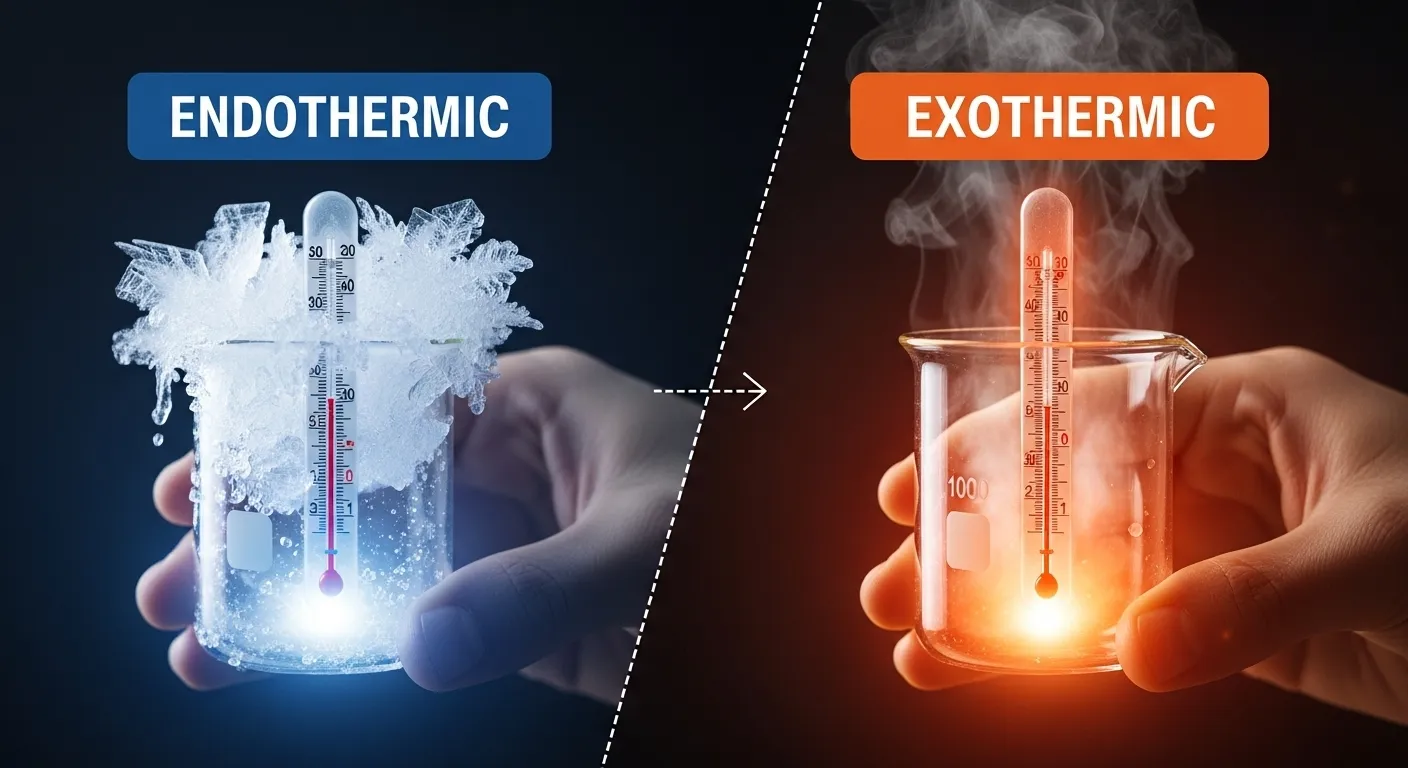
👉 Endothermic reactions absorb heat, while exothermic reactions release heat.
Many students, teachers, and science learners search for “endothermic or exothermic” because these two chemistry terms sound similar but describe opposite processes. In exams, lab reports, and everyday science explanations, mixing them up can completely change the meaning of a sentence.
The confusion usually starts when people try to remember one simple thing: Which one takes in heat and which one gives it out? Add diagrams, equations, and temperature changes, and the topic suddenly feels harder than it really is.
This article solves that problem once and for all. You’ll get a quick answer, clear definitions, word origins, British vs American usage, common mistakes, real-life examples, tables, FAQs, and practical advice. By the end, you’ll never confuse endothermic and exothermic again.
Endothermic or Exothermic – Quick Answer
✅ Endothermic → absorbs heat from surroundings
✅ Exothermic → releases heat to surroundings
Easy example:
- Ice melting = endothermic
- Fire burning = exothermic
The Origin of Endothermic and Exothermic
Both words come from Greek, which makes their meanings logical once you understand them.
Endothermic
- Endo = inside
- Thermic = heat
👉 Endothermic = heat goes inside
Exothermic
- Exo = outside
- Thermic = heat
👉 Exothermic = heat goes outside
This origin explains everything. One pulls heat in. The other pushes heat out.
British English vs American English Usage
Good news: there is no spelling difference between British and American English.
| Term | British English | American English |
| Endothermic | ✅ Same | ✅ Same |
| Exothermic | ✅ Same | ✅ Same |
The words are scientific and international.
Which Term Should You Use?
Use endothermic when:
- The reaction absorbs heat
- The surroundings feel cooler
- Energy is required to continue
Use exothermic when:
- The reaction releases heat
- The surroundings feel warmer
- Energy is given off
Simple memory trick:
- Endo = enter heat
- Exo = exit heat
Common Mistakes with Endothermic or Exothermic
❌ Burning wood is endothermic.
✅ Burning wood is exothermic.
❌ Ice melting gives off heat.
✅ Ice melting absorbs heat.
❌ Endothermic reactions make things hotter.
✅ Exothermic reactions make things hotter.
Most mistakes happen when people focus on temperature change instead of heat flow.
Endothermic and Exothermic in Everyday Examples
Endothermic Examples
- Ice melting
- Water boiling
- Photosynthesis
- Cooking food
- Evaporation of sweat
Exothermic Examples
- Burning fuel
- Fireworks
- Respiration in the body
- Hand warmers
- Explosions
Endothermic vs Exothermic – Comparison Table
| Feature | Endothermic | Exothermic |
| Heat flow | Absorbs heat | Releases heat |
| Surroundings | Get cooler | Get warmer |
| Energy needed | Yes | No |
| Bond energy | More energy absorbed | More energy released |
| Common example | Ice melting | Fire burning |
Endothermic or Exothermic in Equations
Endothermic Reaction
Heat is written on the reactant side:
Reactants + Heat → Products
Exothermic Reaction
Heat is written on the product side:
Reactants → Products + Heat
This is a powerful exam tip.
Endothermic or Exothermic in Real Life
In the Human Body
- Respiration is exothermic. It releases energy to keep us warm.
In Weather
- Evaporation is endothermic. It cools the air.
- Condensation is exothermic. It releases heat.
In Industry
- Cement making uses endothermic reactions.
- Power plants rely on exothermic reactions.
Endothermic or Exothermic – Google Trends & Usage Data
Search data shows:
- Students search this topic most during exam seasons
- Teachers and tutors search for simple explanations
- High search volume from:
- USA
- UK
- India
- Pakistan
- Australia
User intent is usually:
👉 quick definition + easy examples + exam clarity
FAQs: Endothermic or Exothermic
1. Is melting ice endothermic or exothermic?
Endothermic. It absorbs heat.
2. Is boiling water endothermic?
Yes. Heat is absorbed.
3. Is respiration endothermic or exothermic?
Exothermic. Energy is released.
4. Do endothermic reactions feel cold?
Yes, because they take heat from surroundings.
5. Do exothermic reactions always cause fire?
No. Some release heat slowly.
6. Are all chemical reactions one or the other?
Yes. Every reaction absorbs or releases energy.
7. Which one needs energy to start?
Endothermic reactions need continuous energy input.
Conclusion
Understanding endothermic or exothermic reactions is easier than it looks. The key is heat movement. If heat goes in, the reaction is endothermic. If heat goes out, the reaction is exothermic.
Once you remember the Greek roots and focus on heat flow instead of temperature, the confusion disappears. These terms are not just exam words. They explain everyday events like cooking, breathing, weather changes, and energy production.
Whether you’re a student, teacher, or science enthusiast, using these words correctly improves clarity and confidence. With this guide, you now have a complete and simple understanding no more guessing.
👉Savasana or Shavasana: Which Spelling Is Correct?

I’m Daniel R. Whitmore, an English language writer who focuses on spelling differences, word comparisons, and everyday grammar clarity. I enjoy simplifying confusing English words so readers can write with confidence and accuracy.