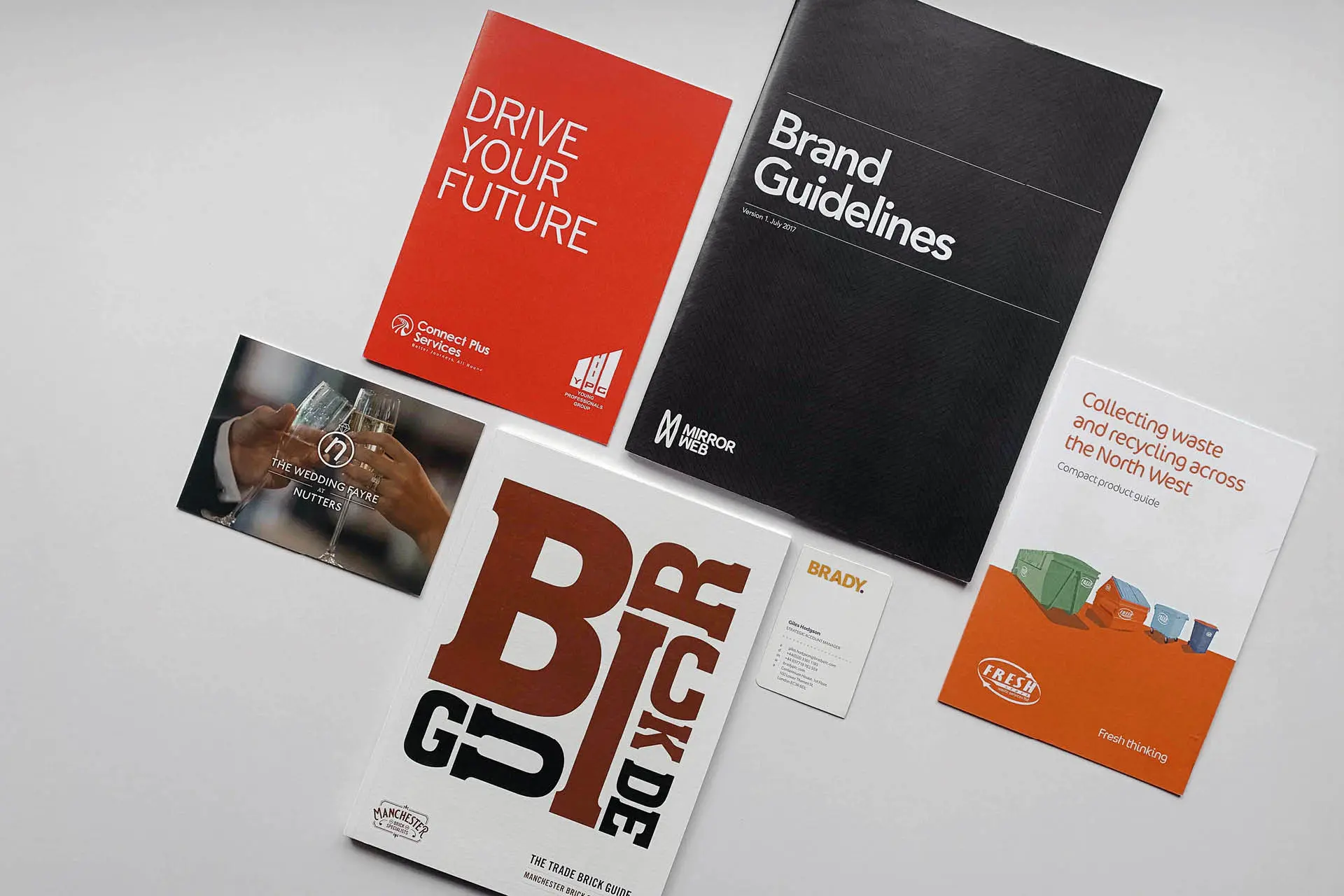
Losing a client you’ve served for two years hurts more than losing a deal you never had. Most service businesses pour their energy into acquisition and treat retention as something that either happens or doesn’t. It doesn’t just happen. Clients drift when the relationship starts to feel transactional, and one of the quietest drivers of that drift is the absence of any physical brand presence in their world after the first invoice. Your emails get deleted. Your portal logins get forgotten. But a well-produced folder sitting on a client’s desk? That stays. This article walks through how branded print collateral creates the kind of persistent, tangible presence that keeps clients from quietly shopping around.
Why Clients Leave Before You Expect Them To
Churn rarely announces itself. Most of the time, a client has already decided to move on before they send the cancellation email. The reasons they give are rarely the real ones. “Budget restructuring” usually means “I stopped feeling like a priority.” “Going in a different direction” often translates to “someone else showed up with more polish and made me feel seen.”
The underlying math makes a strong case for retention investment. SmallBizTrends’ 2025 retention data reports that businesses have a 60-70% chance of selling to an existing customer, compared to just a 5-20% chance with a new prospect. Most businesses still spend the bulk of their marketing budget on the harder path. That imbalance is where churn quietly compounds year over year.
Physical collateral addresses one of retention’s softest but most real failure points: the feeling of being forgotten between check-ins. A client who regularly handles your branded materials experiences your brand as present and active, not periodic and reactive. That distinction matters more than most operators realize until they see the numbers shift.
The Physical Presence Gap Most Service Firms Ignore
Think about what a client actually touches from your business after the contract is signed. An email confirmation. A PDF proposal. A project management notification. All of it lives on a screen, inside a tab, buried inside a folder they will never search again.
Now think about what a client remembers from a competitor who showed up for a pitch. Probably the folder they left behind. The business card tucked into the pocket. The one-pager with your competitor’s logo that sat on the corner of the client’s desk for three weeks while you were sending follow-up emails into a crowded inbox.
Physical marketing collateral occupies space in the real world. You can’t close it with a swipe. You can’t accidentally delete it by archiving a thread. For clients who are evaluating whether to renew, whether to expand scope, or whether to give a referral, the brand they think of is often the one they can see from where they’re sitting.
For most service businesses, the gap between how often they communicate digitally and how often their brand exists in a client’s physical environment is enormous. That gap is doing quiet damage. Closing it doesn’t require a massive budget. It requires a clear plan and the right materials.
“Physical collateral is memorable in a way that digital formats are simply not designed to be. It occupies space, demands handling, and builds association through the act of touch in a way that no email or push notification can replicate.” This reflects a consistent consensus among marketing researchers who study multi-channel brand recall and long-term client engagement.
The Collateral Triage Framework
Not every client needs every piece of collateral at every stage. The goal is matching the right material to the right moment. The Collateral Triage Framework breaks the client relationship into three distinct phases, each with its own physical touchpoint objective.
| Stage | Timing | Collateral Goal | Recommended Formats |
| Stage 1: Welcome | Client signs | Confirm the decision, establish expectations | Branded welcome kit, process overview sheet, contact card |
| Stage 2: Engagement | During active work | Demonstrate ongoing attention and value | Quarterly update summary, printed case study, reference guide |
| Stage 3: Renewal | Before contract review | Reinforce delivered value, prompt re-commitment | Results summary in a presentation folder, handwritten note |
Stage 1 is where the bulk of the leverage lives. A physical welcome packet tells the client they made the right call before the work even begins. It sets a tone that no onboarding email sequence can replicate. Service businesses that cover Stage 1 consistently report higher client confidence in the first 30 days, and that early confidence is one of the strongest predictors of whether a client reaches the 12-month mark. Stage 3 is the most underused. A physical package at renewal time signals that you have prepared for this conversation, not just shown up to defend your invoice. It changes the dynamic of the meeting before a single word is spoken.
The Format That Does the Heaviest Lifting
Inside any well-assembled client kit, one format consistently earns its place above the others. Printed folders with pockets organize everything a client needs to know without requiring them to dig through an inbox. They hold a business card, a leave-behind, a printed proposal, a reference sheet, or all four at once. They sit on a desk in a way that a PDF attachment never will.
The best results come from folders that reflect your brand accurately: your logo printed crisply, your color palette consistent with everything else you put in front of clients, your paper stock heavy enough to feel deliberate. A flimsy folder undermines the whole kit. A well-produced one does active brand work every time the client reaches for it, and clients reach for them far more often than you’d expect.
The format also travels well. Leave one with a contact at a client’s office, and it ends up shared or passed to a decision-maker down the hall. That’s earned impressions your digital collateral will never generate on its own.
Why Print Sticks When Digital Disappears
The effectiveness of physical materials isn’t just intuitive. A 2026 data compilation by ElectroIQ found that nearly 71% of consumers prefer reading print marketing materials over their digital equivalents. That preference holds even among professionals who spend most of their working hours on screens.
What’s happening cognitively is straightforward. Physical objects require a kind of focused attention that a notification is specifically designed to shortcut. Reading something printed activates different cognitive processing than skimming a screen. The material exists in space and time in a way that a downloaded PDF simply doesn’t.
For service businesses, that cognitive reality has a direct practical payoff. A client who handles your printed materials on a regular basis is processing your brand more deeply than a client who only encounters you inside a crowded inbox. Deeper processing builds more durable brand associations. Durable associations reduce the likelihood that a competitor’s pitch finds receptive ears when you’re not in the room.
Start With One Stage and Build From There
You don’t need a full three-stage program on day one. Build Stage 1 first. Design your welcome kit, source folders that match your brand, print them properly, and put the kit in a client’s hands within 48 hours of signing. That single investment will do more for your retention numbers in the first quarter than most of the digital touchpoints you’re currently running.
The clients who stay longest rarely cite a single reason for their loyalty. But they consistently describe feeling remembered, attended to, and confident they made the right choice. A folder on a desk is one small, concrete way to make sure they keep feeling that way. What’s your brand occupying in your clients’ physical world right now?
