Many people search for “likable or likeable” because both spellings appear in books, blogs, and online articles. This makes writers unsure which one is correct. You may see likable in American content and likeable in British writing, which adds to the confusion. Since this word is often used to describe people, brands, or characters, choosing the right spelling matters.
The confusion comes from regional spelling preferences and how English handles silent letters. Some versions of English prefer shorter spellings, while others keep traditional forms. This is not about right versus wrong it’s about audience and consistency.
In this article, you’ll get a quick answer, learn where both spellings come from, see British vs American usage, avoid common mistakes, and understand how to use the correct form in everyday writing. By the end, you’ll know exactly which spelling to choose and why.
Likable or Likeable – Quick Answer
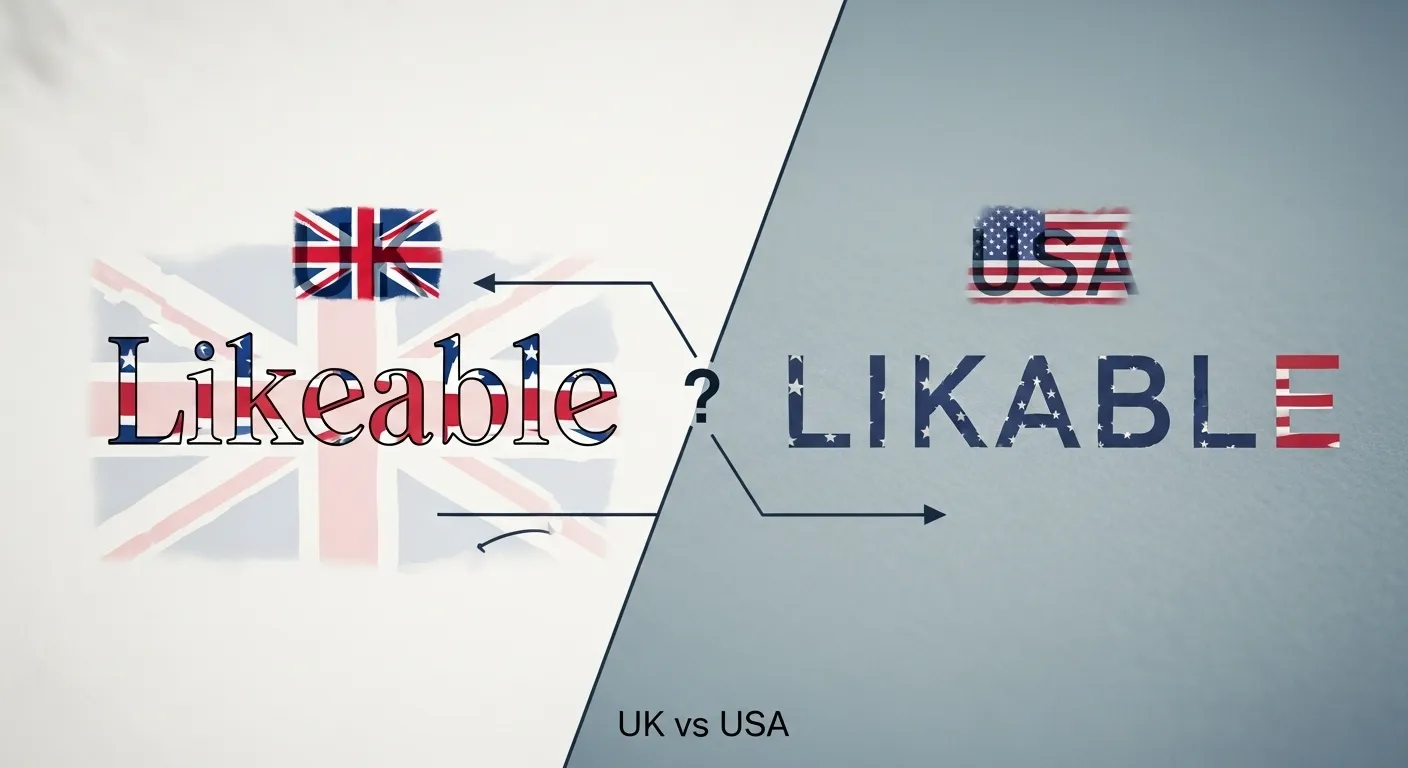
✅ Likable is preferred in American English.
✅ Likeable is preferred in British English.
Examples:
- She is very likable. (US)
- He has a likeable personality. (UK)
Both spellings mean the same thing.
The Origin of Likable or Likeable
The base word is like, meaning to enjoy or approve of. When forming adjectives, American English often drops silent letters for simplicity. That’s how likable became common in the US.
British English usually keeps the original form of the base word, which is why likeable is preferred. The meaning stayed the same; only the spelling changed due to style standards.
British English vs American English Spelling
This is a regional spelling difference.
| Spelling | British English | American English |
| Likable | ❌ Rare | ✅ Preferred |
| Likeable | ✅ Preferred | ❌ Less common |
Both are correct depending on region.
Which Spelling Should You Use?
- US audience: Use likable
- UK/Commonwealth audience: Use likeable
- Global audience: Choose one and stay consistent
Professional tip:
Follow your style guide (APA, Chicago, Oxford).
Common Mistakes with Likable or Likeable
❌ She is very likeble.
✅ She is very likeable.
❌ He’s a likable person (in UK academic writing)
✅ He’s a likeable person
Main mistake: mixing US and UK spelling styles in one document.
Likable or Likeable in Everyday Examples
Emails:
- She has a very likable attitude.
News:
- The actor is known for his likeable charm.
Social Media:
- Such a likable character!
Formal Writing:
- The leader’s likeable qualities earned public trust.
Likable or Likeable – Google Trends & Usage Data
Search trends show:
- Likable dominates in the United States
- Likeable is more common in the UK, Australia, and India
Searches for “likable or likeable” mostly come from writers checking correct regional usage.
Comparison Table: Likable vs Likeable
| Spelling | Correct | Region |
| Likable | ✅ Yes | American English |
| Likeable | ✅ Yes | British English |
FAQs: Likable or Likeable
1. Are likable and likeable both correct?
Yes, both are correct.
2. Which spelling should I use in exams?
Use the form preferred by your exam board.
3. Is one more formal than the other?
No, both are equally formal.
4. Do they have different meanings?
No, the meaning is the same.
5. Which spelling is better for SEO?
Use the spelling your target audience searches for.
6. Can I mix both spellings in one article?
No. Always stay consistent.
Conclusion
The difference between likable or likeable is not about meaning it’s about regional spelling preference. American English prefers likable, while British English prefers likeable. Both spellings are correct and widely accepted.
To write clearly and professionally, focus on your audience and remain consistent throughout your text. Once you know who you’re writing for, choosing the right spelling becomes easy. With this understanding, you’ll never hesitate between likable and likeable again.
Skiid or Skied: Which Spelling Is Correct and When to Use It?

I’m Laura M. Collins, and I specialize in writing clear explanations for confusing English words. I believe understanding small spelling differences can greatly improve written communication.