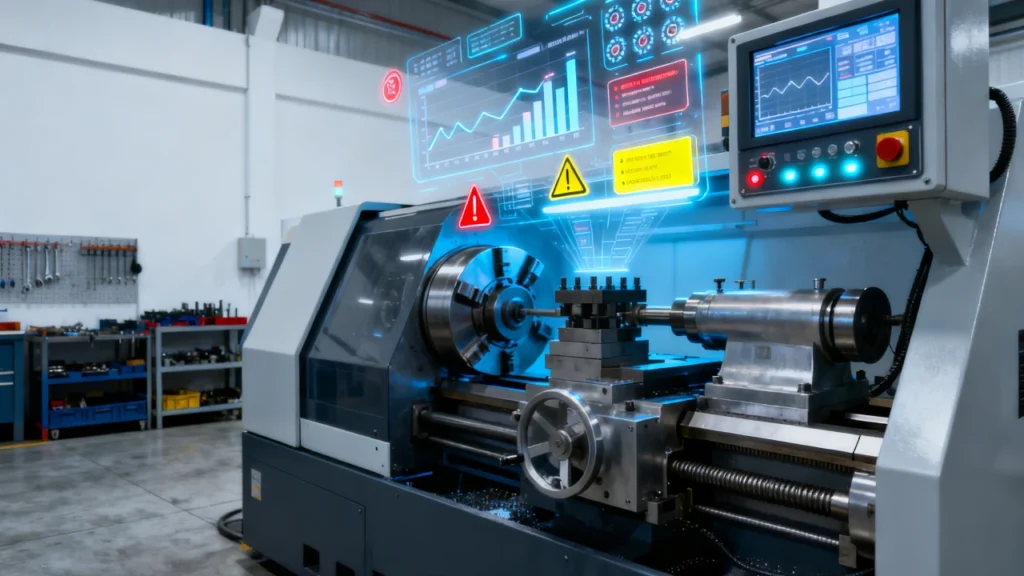
A closed loop manufacturing system does more than detect a problem. It feeds the signal back so the process corrects itself. That feedback is where the return lives. Open-loop closed loop manufacturing that only reports defects still relies on people to react, while a true closed loop ties detection to correction and recovers losses far sooner than any manual response can.
What is a closed loop manufacturing system?
A closed loop manufacturing system links detection and correction so that a deviation triggers an automatic or guided response. Instead of logging a defect for later review, it adjusts the process, alerts the operator, or stops the line before more bad parts are made.
The contrast with open-loop is the whole point. Open-loop closed loop manufacturing detects and reports. A real closed loop acts on what it detects, which compresses the time between a problem appearing and being contained from hours to seconds, and that time difference is the entire business case.
Where does the ROI of closed-loop manufacturing come from?
The ROI comes from containment speed. By correcting deviations the moment they appear, a the system prevents the batch of defective parts that open-loop processes only discover at final inspection, cutting scrap, rework and customer escapes.
Genichi Taguchi’s loss function quantifies why early correction pays: cost rises with every part made off-target. A closed-loop manufacturing system minimises the count of off-target parts, which is the clearest and most measurable source of payback in the whole approach.
ASQ and Juran long estimated the cost of poor quality at 15 to 20 percent of sales in many operations. Closing the loop attacks that figure directly, so the size of a plant’s existing quality cost is a fair predictor of how fast the investment returns.
How quickly does a closed-loop system pay back?
Payback depends on current scrap and rework levels, but plants with high rework typically recover the investment within the first year. The higher the existing cost of poor quality, the faster a the system returns its cost.
The mechanism is simple to model. Multiply the parts a defect run would have produced before manual detection by their unit cost, and the avoided loss per event becomes clear. Across a year, those avoided events usually dwarf the system’s price.
What makes a loop genuinely closed?
A loop is genuinely closed when the response is automatic or tightly guided, not dependent on someone noticing a report. The defining test is whether detection alone triggers containment, through a line stop, an operator alert, or a process adjustment.
The data trail is a quieter benefit. Because a closed loop records every deviation and response, it builds a history that shows which problems recur and which corrective actions actually held, turning day-to-day containment into evidence for permanent process fixes.
Operator trust is part of the design. A loop that stops the line on a false alarm quickly loses credibility, so detection accuracy and a clear escalation path matter as much as speed, because a system the floor overrides is no closed loop at all in practice.
If a human still has to read a dashboard and decide to act, the loop is open in practice however it is marketed. To benchmark closed-loop ROI for your process, book a review at jidoka-tech.ai/contact-us.
Frequently Asked Questions
What is the difference between open-loop and closed-loop manufacturing?
Open-loop detects and reports problems for people to act on. A closed loop manufacturing system feeds the signal back to correct the process automatically or guide the operator, containing the issue far sooner and with less reliance on a person noticing.
Which plants see the fastest closed-loop ROI?
Plants with high scrap and rework see the fastest return, because a closed loop manufacturing system cuts the largest existing cost of poor quality first, so payback tracks the size of the problem being solved.
