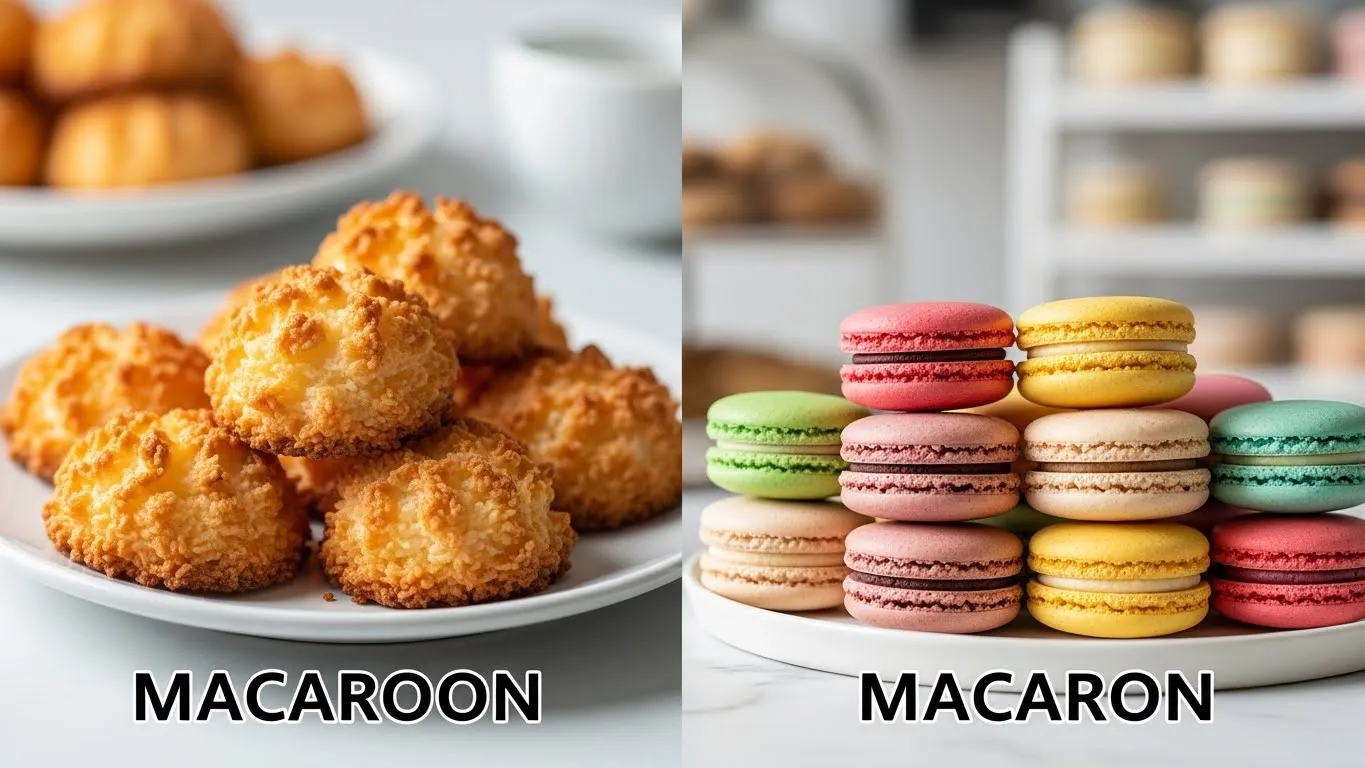
Have you ever ordered a macaroon but received a colorful sandwich cookie instead? Or searched online for a recipe and felt confused by two nearly identical words? You’re not alone. The keyword “macaroon or macaron” is searched thousands of times every month because these two sweet treats look, sound, and spell almost the same but they are not the same at all.
The confusion usually starts with pronunciation and spelling. Both words come from similar roots, both refer to desserts, and both appear in bakeries worldwide. However, one is a chewy coconut cookie, while the other is a delicate French pastry made with almond flour. Mixing them up can lead to misunderstandings in recipes, menus, food blogs, and even professional writing.
This article solves that confusion clearly and quickly. You’ll get a direct answer, learn the history behind both words, see how British and American English handle them, and know which spelling to use depending on your audience. By the end, you’ll never confuse macaroon vs macaron again—and neither will your readers.
Macaroon or Macaron – Quick Answer
Macaroon and macaron are both correct—but they mean different desserts.
- Macaroon: A coconut-based cookie, often chewy and rustic.
Example: “I baked chocolate-dipped coconut macaroons.” - Macaron: A French sandwich cookie made with almond flour, egg whites, and filling.
Example: “The bakery sells pistachio macarons.”
Simple rule:
👉 Coconut = macaroon
👉 French sandwich cookie = macaron
The Origin of Macaroon or Macaron
Both words trace back to the Italian word “maccherone”, meaning a fine paste. Over time, the word spread across Europe.
- Macaron evolved in France and became the refined, colorful pastry we know today.
- Macaroon developed as a simpler variation, especially popular in English-speaking countries, using coconut instead of almonds.
The spelling difference exists because languages adapted the word differently. French kept macaron, while English added an extra “o,” forming macaroon.
British English vs American English Spelling
There is no spelling difference between British and American English for these words. The difference is meaning, not region.
| Feature | Macaroon | Macaron |
| Language Origin | English adaptation | French |
| Main Ingredient | Coconut | Almond flour |
| Texture | Chewy, dense | Light, crisp |
| UK Usage | Common | Common |
| US Usage | Common | Common |
Which Spelling Should You Use?
Your choice depends on what dessert you mean and who your audience is.
- US Audience:
Use macaroon for coconut cookies, macaron for French pastries. - UK & Commonwealth:
Same usage applies—meaning matters more than region. - Global or Professional Writing:
Always match the spelling to the correct dessert to avoid confusion.
👉 Sulfur or Sulphur: Which Spelling Is Correct?
Common Mistakes with Macaroon or Macaron
- ❌ Calling French macarons “macaroons”
✅ Correct: “French macarons” - ❌ Using the terms interchangeably
✅ Correct: Treat them as separate desserts - ❌ Assuming it’s US vs UK spelling
✅ Correct: It’s a meaning difference, not regional
Macaroon or Macaron in Everyday Examples
- Email:
“Please order coconut macaroons for the meeting.” - News:
“Paris bakeries are famous for colorful macarons.” - Social Media:
“These raspberry macarons look perfect!” - Formal Writing:
“The dessert menu includes almond macarons and coconut macaroons.”
Macaroon or Macaron – Google Trends & Usage Data
Search trends show:
- Macaron is more popular in France, Europe, and food blogs.
- Macaroon is searched more in the US, especially around holidays like Passover.
People usually search this keyword to avoid embarrassment, cook correctly, or write accurately.
Macaroon or Macaron Comparison Table
| Term | What It Is | Common Confusion |
| Macaroon | Coconut cookie | Mistaken for macaron |
| Macaron | French sandwich cookie | Misspelled as macaroon |
FAQs: Macaroon or Macaron
1. Are macaroon and macaron the same?
No. They are different desserts.
2. Which one is French?
Macaron is French.
3. Which one uses coconut?
Macaroon uses coconut.
4. Is macaroon American spelling?
No. It’s a different word, not a regional spelling.
5. Can I use macaroon instead of macaron?
Only if you mean the coconut cookie.
6. Which is healthier?
Macaroons are often higher in sugar and fat due to coconut.
7. Why do people confuse them?
Because they sound similar and share a common origin.
Conclusion
The confusion between macaroon or macaron is understandable, but easy to fix once you know the difference. A macaroon is a coconut-based cookie with a dense, chewy texture, while a macaron is a delicate French pastry made from almond flour and filled with cream or ganache. The spelling difference is not about British or American English it’s about meaning.
When writing, baking, or ordering desserts, using the correct term shows clarity and professionalism. For bloggers, marketers, and food writers, choosing the right word also builds trust. Remember the simple rule: coconut equals macaroon, French sandwich cookie equals macaron.
By understanding the origin, usage, and common mistakes, you can confidently use both terms correctly in any context casual or formal.

I’m Laura M. Collins, and I specialize in writing clear explanations for confusing English words. I believe understanding small spelling differences can greatly improve written communication.