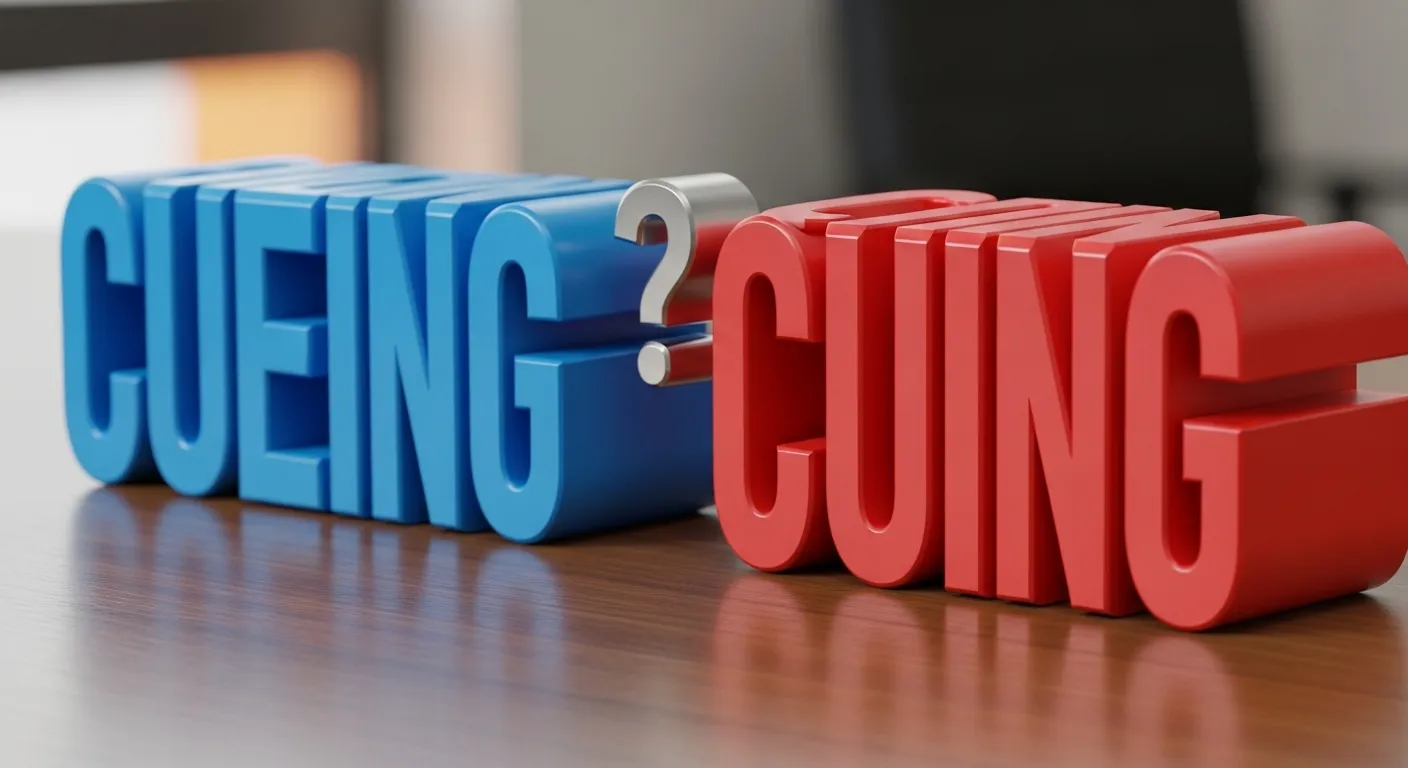
“Cueing” is the correct and widely accepted spelling, while “cuing” is a simplified but less common variant.
Imagine you’re writing an email at work: “I’m cueing the video for the presentation.” You pause. Something feels off. Should it be cueing… or cuing? This tiny spelling doubt can slow you down, especially when you want your writing to look polished and professional.
Many people search for “cuing or cueing” because English spelling rules can feel inconsistent. Words that end in “-e” often drop the “e” before adding “-ing” (like make → making). But then, words like cue break the pattern. This creates confusion for students, professionals, and even native speakers.
This article clears that confusion once and for all. You’ll get a quick answer, learn the origin, see real examples, and understand which spelling to use in different contexts. By the end, you’ll never hesitate again when writing cuing or cueing.
Cuing or Cueing – Quick Answer
The correct and most accepted spelling is cueing.
- ✅ She is cueing the next song.
- ✅ He is cueing the actors backstage.
The spelling cuing is also used sometimes, especially in simplified English, but it is less common and may look incorrect in formal writing.
👉 Best rule: Use cueing in professional, academic, and everyday writing.
The Origin of Cuing or Cueing
The word cue comes from theater. It referred to a signal for actors to speak or act. Over time, it expanded into music, film, and daily language.
Originally:
- A cue meant a prompt or signal.
- Later, it became a verb: to cue someone.
Now, when adding “-ing”:
- The base word is cue
- Instead of dropping the “e,” we keep it → cueing
Why?
Because removing the “e” (cuing) can make the word look unclear or awkward. English sometimes keeps letters to preserve meaning and readability.
So, cueing stayed popular because it looks clearer and matches the original word.
British English vs American English Spelling
Both British and American English prefer cueing, but there is a small variation in usage trends.
| Feature | Cueing | Cuing |
| Usage Frequency | Very common | Less common |
| American English | Preferred | Rare |
| British English | Preferred | Occasionally used |
| Formal Writing | Strongly recommended | Not recommended |
| Clarity | Clear and familiar | Slightly confusing |
👉 Even though both forms exist, cueing dominates globally.
Which Spelling Should You Use?
Choosing between cuing or cueing depends on your audience.
- For US readers: Always use cueing
- For UK/Commonwealth readers: Still use cueing
- For global audiences: Stick with cueing
If you are:
- Writing emails → use cueing
- Writing blogs/articles → use cueing
- Writing academic work → use cueing
👉 Simple advice: Use cueing everywhere to stay safe and professional.
Common Mistakes with Cuing or Cueing
Here are frequent errors people make:
❌ I am cuing the presentation.
✔️ I am cueing the presentation.
❌ He cued the music and started speaking. (correct verb, but confusion with -ing form)
✔️ He is cueing the music.
❌ Dropping the “e” because of grammar rules
✔️ Keep the “e” in this case
👉 Why this happens: People apply the rule “drop the e before -ing,” but cue is an exception.
Cuing or Cueing in Everyday Examples
Let’s see how cueing works in real life:
Emails
- I am cueing the slides for the meeting.
- Please start cueing the video at 2:00.
News & Media
- The DJ is cueing the next track.
- The director was cueing actors from backstage.
Social Media
- Cueing my favorite song for the weekend vibes 🎶
- Already cueing Netflix for tonight.
Formal Writing
- The technician is responsible for cueing audio and visual elements during the event.
👉 Notice how cueing fits naturally everywhere.
Cuing or Cueing – Google Trends & Usage Data
Search data shows that cueing is far more popular worldwide.
- United States: Almost all usage is cueing
- United Kingdom: Strong preference for cueing
- Australia & Canada: Mostly cueing
- Global trend: Cuing appears rarely
Why?
- People prefer familiar spellings
- “Cueing” looks more complete and readable
- Dictionaries and style guides recommend it
👉 Conclusion from data: “Cueing” is the dominant and trusted form.
Comparison Table: Cuing vs Cueing
| Aspect | Cueing | Cuing |
| Correctness | ✅ Correct | ⚠️ Acceptable but rare |
| Popularity | Very high | Low |
| Professional Use | Recommended | Avoid |
| Readability | Clear | Slightly unclear |
| Global Acceptance | Strong | Weak |
FAQs About Cuing or Cueing
1. Is cuing wrong?
No, but it is less common. It may look incorrect in formal writing.
2. Why is cueing preferred?
Because it keeps the original word “cue” clear and easy to read.
3. Do dictionaries accept cuing?
Some do, but they still list cueing as the main form.
4. Which spelling should students use?
Students should always use cueing in exams and assignments.
5. Is cueing used in professional writing?
Yes, it is the standard choice in business, media, and academia.
6. Does “cueing” follow grammar rules?
It breaks the usual “drop the e” rule, but English has many exceptions.
7. Can cuing confuse readers?
Yes, it may look like a typo or unfamiliar spelling.
Conclusion
The confusion between cuing or cueing comes from a simple spelling rule that doesn’t always apply. While many English words drop the “e” before adding “-ing,” the word cue keeps it. This is why cueing has become the standard and most trusted spelling.
In today’s world, where writing clearly matters more than ever, choosing the right spelling can make a big difference. Whether you are sending emails, writing articles, or posting on social media, using cueing helps your message look professional and easy to understand.
Although cuing exists, it is rare and can sometimes confuse readers. That’s why experts, dictionaries, and style guides all lean toward cueing.
So next time you pause and think about cuing or cueing, remember this simple rule:
Stick with “cueing” for clarity, confidence, and correctness.

I’m Emily K. Dawson, and I write about commonly confused English words and spelling mistakes. My goal is to make English easier for learners by explaining grammar in a simple, practical way.