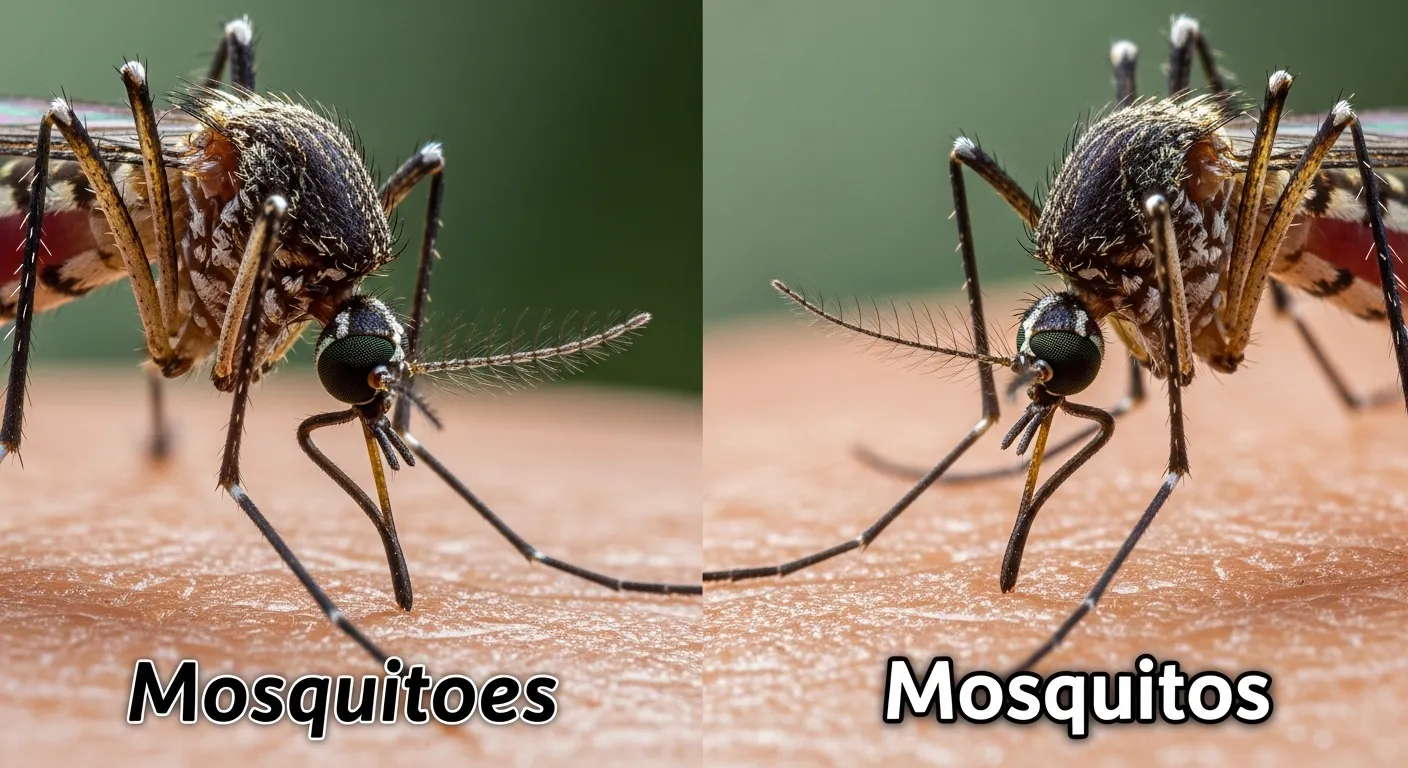
Both mosquitoes and mosquitos are correct plural forms of mosquito. However, mosquitoes is more common and widely preferred in modern English.
Have you ever paused while writing and wondered: should it be mosquitoes or mosquitos? You are not alone. This small spelling choice confuses many people, from students and bloggers to professionals and content writers.
Since the word appears often in health tips, weather reports, travel guides, and daily conversations, people want to use the correct form with confidence.
Most users search this keyword because they notice both spellings online. One article uses mosquitoes, while another writes mosquitos. This raises a simple question: which one is right, and does it depend on British or American English?
The confusion comes from English plural rules and the word’s history. Some words ending in -o take -es, while others take only -s. Understanding this difference helps you avoid mistakes and write clearly.
In this guide, you will get a quick answer, real examples, usage tips for different audiences, and data showing which spelling people actually use today.
Mosquitoes or Mosquitos – Quick Answer
Both spellings are correct:
- Mosquitoes – Most common and widely accepted
- Mosquitos – Less common but still correct
Examples:
- The lake is full of mosquitoes after the rain.
- We used spray to keep mosquitos away.
In formal writing, academic work, and global content, mosquitoes is the safer choice.
The Origin of Mosquitoes or Mosquitos
The word mosquito comes from Spanish. It means “little fly.” The root word is mosca, which means fly.
When English borrowed the word, it kept the original spelling but applied English plural rules. Many English words ending in -o add -es to form the plural:
- Potato → Potatoes
- Tomato → Tomatoes
- Hero → Heroes
Following this pattern, the plural became mosquitoes.
However, English is flexible. Over time, people also began using the shorter plural mosquitos, especially in informal writing and American usage. Both forms entered dictionaries, which is why both are considered correct today.
British English vs American English Spelling
Unlike many spelling differences, this word does not have a strict British vs American rule. Both regions accept both forms. The difference is mainly about preference and frequency.
| Region | Preferred Form | Notes |
| United States | Mosquitoes | Most common in media and education |
| United Kingdom | Mosquitoes | Standard in formal writing |
| Australia & Canada | Mosquitoes | Preferred in official content |
| Informal/Regional Use | Mosquitos | Less common but accepted |
Examples:
- US news: Mosquitoes spread disease after heavy rains.
- UK health advice: Protect yourself from mosquito bites.
- Informal blog: Summer brings more mosquitos.
Overall, mosquitoes dominates in both British and American English.
Which Spelling Should You Use?
Choose your spelling based on your audience:
For US readers:
Use mosquitoes. It is the standard form in schools, news, and professional writing.
For UK or Commonwealth readers:
Use mosquitoes. It is the preferred and formal spelling.
For global or online content:
Always choose mosquitoes. It looks more professional and matches common usage worldwide.
When is “mosquitos” acceptable?
- Casual writing
- Personal messages
- Informal blogs or social media
If you want safe, clear, and professional writing, mosquitoes is the best choice.
Common Mistakes with Mosquitoes or Mosquitos
Here are frequent errors and how to fix them:
Mistake 1: Mixing spellings in one article
Wrong: Mosquitos are active. These mosquitoes bite at night.
Correct: Use one form consistently.
Mistake 2: Writing “mosquito’s” for plural
Wrong: Many mosquito’s were seen.
Correct: Many mosquitoes were seen.
Mistake 3: Using the short form in formal writing
In academic or medical content, always use mosquitoes.
Mistake 4: Adding extra letters
Wrong: Mosquetoes, Mosqitoes
Correct: Mosquitoes
Consistency and accuracy make your writing more professional.
Mosquitoes or Mosquitos in Everyday Examples
Email:
Please keep windows closed to prevent mosquitoes from entering.
News:
Heavy rains have increased mosquito populations in the city.
Social Media:
These mosquitoes won’t let me sleep tonight!
Health Notice:
Use repellent to protect yourself from mosquito bites.
Travel Guide:
Carry spray if you visit areas with many mosquitoes.
In most real-life situations, you will see and use mosquitoes.
Read more: Mama or Mamma: Why One Form Is Preferred
Mosquitoes or Mosquitos – Google Trends & Usage Data
Usage data shows a clear pattern:
- Mosquitoes is searched far more often worldwide.
- It dominates in the United States, United Kingdom, Canada, and Australia.
- Health organizations, government sites, and news agencies use mosquitoes almost exclusively.
- Mosquitos appears occasionally in blogs, local writing, and informal content.
Popularity by region:
| Country | Most Used Form |
| USA | Mosquitoes |
| UK | Mosquitoes |
| Canada | Mosquitoes |
| Australia | Mosquitoes |
| Global Web Content | Mosquitoes |
This data confirms that mosquitoes is the standard global choice.
Comparison Table: Mosquitoes vs Mosquitos
| Feature | Mosquitoes | Mosquitos |
| Correct spelling | Yes | Yes |
| Common usage | Very common | Less common |
| Formal writing | Recommended | Not preferred |
| Global content | Best choice | Avoid |
| Informal writing | Acceptable | Acceptable |
| SEO and professional use | Preferred | Not recommended |
FAQs
1. Which is correct: mosquitoes or mosquitos?
Both are correct, but mosquitoes is more common and preferred.
2. Is “mosquitos” wrong?
No, it is correct but less widely used.
3. Which spelling is used in American English?
Both are accepted, but mosquitoes is more common.
4. Which spelling should I use for formal writing?
Use mosquitoes.
5. Why are there two spellings?
English allows different plural forms for some words ending in -o.
6. Which spelling is better for SEO?
Mosquitoes, because it has higher search volume.
7. Do dictionaries accept both forms?
Yes, most major dictionaries list both as correct.
Conclusion
The confusion between mosquitoes and mosquitos is common, but the solution is simple. Both forms are correct, and you will find each one in dictionaries and everyday use. However, usage patterns clearly favor one spelling.
Today, mosquitoes is the dominant and preferred form across the world. It appears in news reports, health guidelines, academic writing, and professional content. It also matches standard plural rules for many English words ending in -o. Because of its wide acceptance, this spelling is the safest choice for formal writing, business communication, and online content.
The shorter form, mosquitos, is still valid but appears mostly in informal contexts. While it is not wrong, it may look less professional in serious writing.
If your goal is clarity, consistency, and credibility, always use mosquitoes. Choosing the standard form helps your writing look polished and ensures your message reaches a global audience without confusion.
Vice or Vise: Which Spelling Should You Use? In 2026

I’m Oliver J. Bennett, an English content writer passionate about word usage and spelling comparisons. I enjoy breaking down small language details that often confuse writers and students.