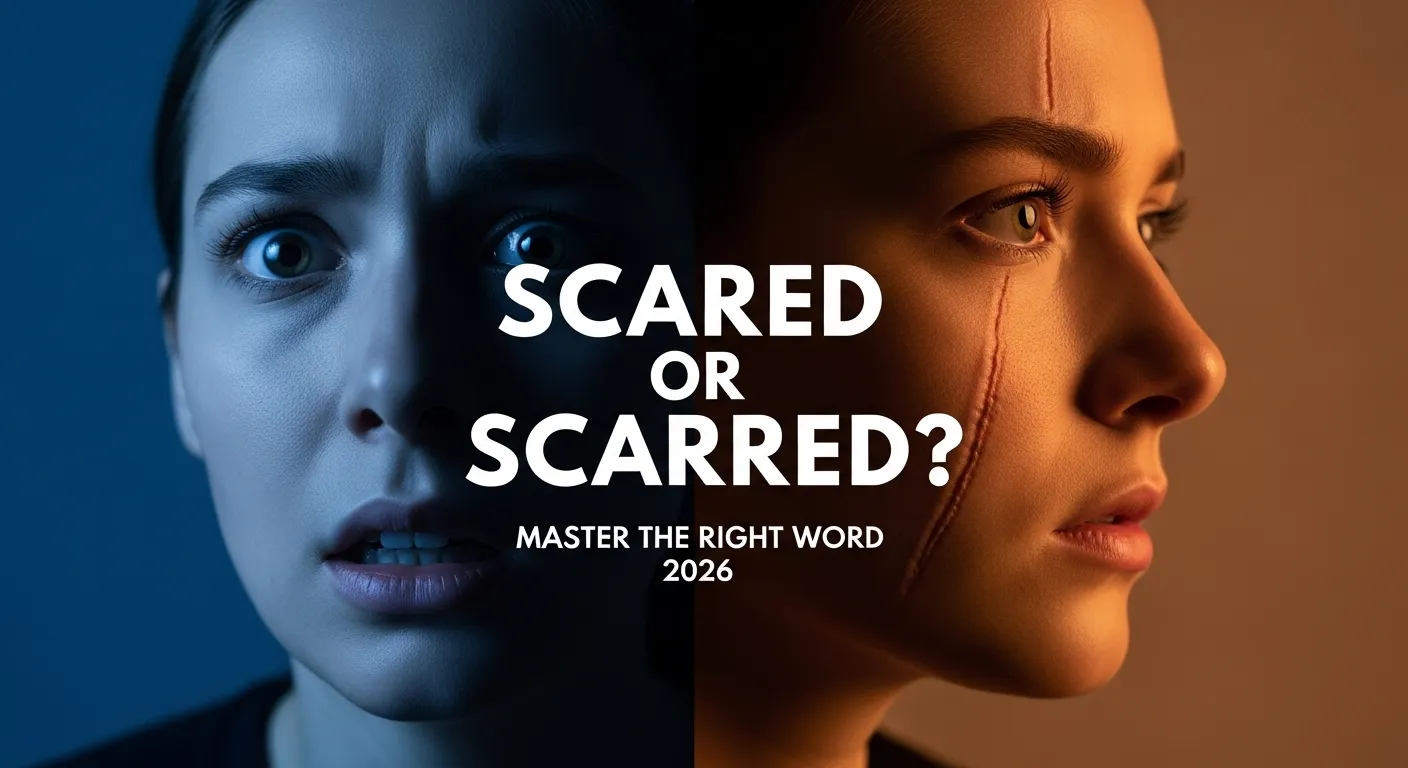
Many people search for “scared or scarred” because these two words look similar but have very different meanings.Scared = feeling fear; Scarred = having a mark or emotional wound from a past event. One small extra “r” can completely change what a sentence means. This often causes confusion in emails, stories, exams, and even professional writing. You might want to say you felt afraid, but by mistake, you end up saying you have a permanent mark. That can lead to misunderstanding or even embarrassment.
The confusion happens because both words come from related ideas of fear and damage, but they describe different things. Scared talks about feelings. Scarred talks about lasting marks or deep emotional damage. Since both words are common in daily English, people want a fast and clear answer: which one should I use?
This article solves that problem step by step. You’ll get a quick answer, learn where the words come from, see how British and American English use them, and understand common mistakes. By the end, you’ll know exactly when to use scared and when to use scarred with confidence.
Scared or Scarred – Quick Answer
✅ Scared means afraid or frightened.
✅ Scarred means marked permanently, physically or emotionally.
Examples:
- I was scared during the storm.
- He was scarred after the accident.
They are not interchangeable.
The Origin of Scarred or Scared
The word scared comes from the Old Norse word skirra, meaning to frighten. Over time, it became linked with fear or being afraid.
The word scarred comes from Old French escarre, meaning a mark or cut. It refers to physical scars and later emotional damage.
The spelling difference exists because they come from different language roots and describe different ideas—fear versus damage.
British English vs American English Spelling
There is no spelling difference between British and American English for these words.
| Word | British English | American English |
| Scared | ✅ Correct | ✅ Correct |
| Scarred | ✅ Correct | ✅ Correct |
The meaning stays the same in both forms of English.
Which Spelling Should You Use?
Use scared when:
- Talking about fear or being afraid
- Describing emotions or reactions
Use scarred when:
- Talking about physical marks
- Describing long-term emotional damage
Audience advice:
- US: Same usage
- UK/Commonwealth: Same usage
- Global writing: Choose based on meaning, not region
Common Mistakes with Scared or Scarred
❌ I was scarred of the dog.
✅ I was scared of the dog.
❌ She is scared from the accident on her face.
✅ She is scarred from the accident on her face.
Easy tip:
- One “r” = fear (scared)
- Two “r”s = damage (scarred)
Scared or Scarred in Everyday Examples
Emails:
- I was scared to miss the deadline.
News:
- The fire left many families scarred for life.
Social Media:
- That movie really scared me!
Formal Writing:
- The event scarred the community emotionally.
Scarred or Scared – Google Trends & Usage Data
Search trends show high interest in “scared or scarred” in:
- United States
- United Kingdom
- India
- Pakistan
- Australia
Most searches come from students, writers, and non-native English speakers. People usually know one word but want to confirm the correct meaning and spelling.
Comparison Table: Scared vs Scarred
| Word | Meaning | Correct Usage |
| Scared | Afraid | Emotional reaction |
| Scarred | Permanently marked | Physical or emotional damage |
FAQs: Scared vs Scarred
1. Can scared and scarred mean the same thing?
No. They have completely different meanings.
2. Is scarred only for physical marks?
No. It can also mean emotional damage.
3. Is scared always about fear?
Yes, it always refers to being afraid.
4. Do British and American English use them differently?
No, usage is the same.
5. Can someone be emotionally scarred but not scared?
Yes. Emotional scars can exist without fear.
6. How can I remember the difference easily?
Extra “r” = long-lasting damage.
Conclusion
The difference between scared or scarred is small in spelling but huge in meaning. Scared describes fear or a moment of being afraid. Scarred describes lasting marks, either on the body or the mind. Mixing them up can confuse readers and change the message of your sentence.
English learners and even native speakers often make this mistake because the words look similar. The key is to focus on meaning. Ask yourself: am I talking about fear, or am I talking about damage that lasts? Once you do that, the correct choice becomes clear.
For emails, exams, articles, and professional writing, using the right word improves clarity and trust. Remember the simple rule: one “r” for fear, two “r”s for damage. With that trick, you’ll never confuse scared and scarred again.
Reciept or Receipt: Which Spelling Is Correct? 2026

I’m Emily K. Dawson, and I write about commonly confused English words and spelling mistakes. My goal is to make English easier for learners by explaining grammar in a simple, practical way.