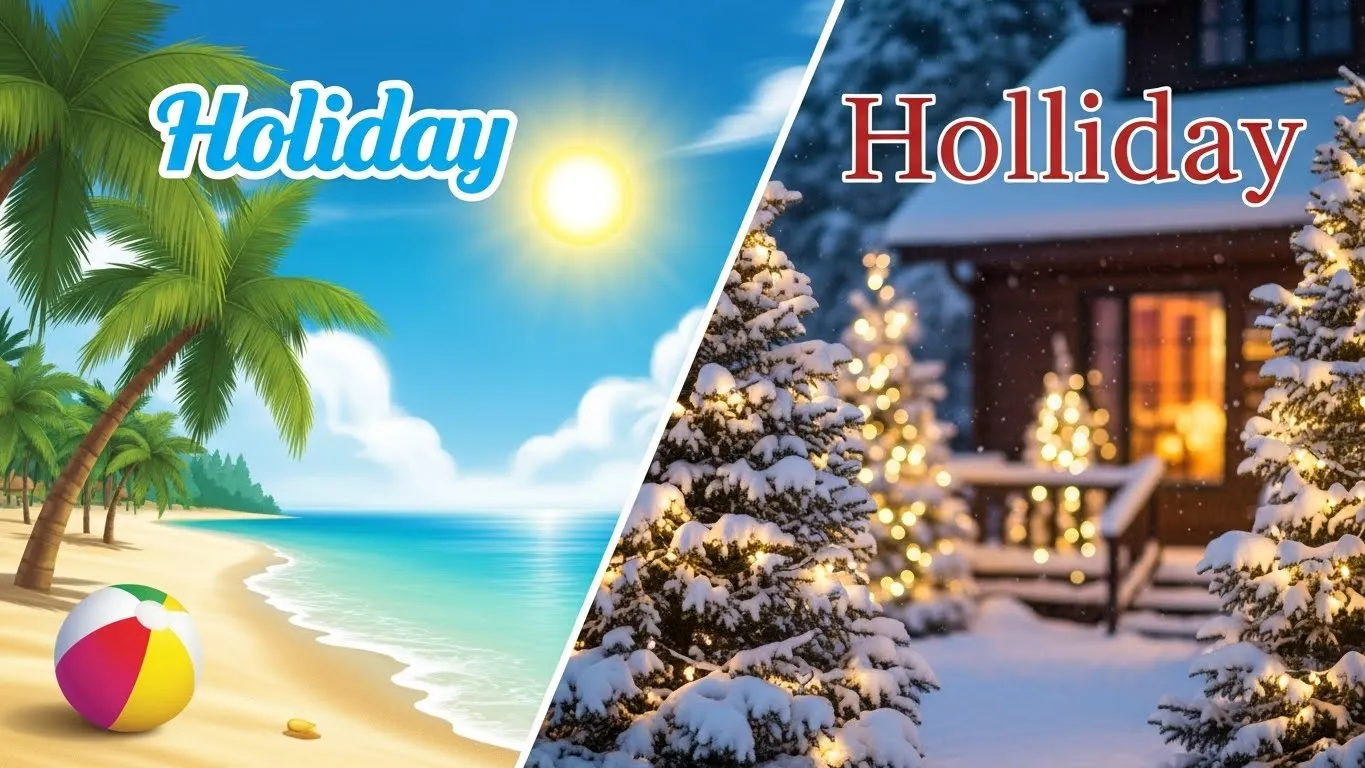
Holiday is the correct word for vacations or days off; Holliday is usually a surname or proper name. Are you confused about whether to write “holliday” or “holiday”? You’re not alone. This common spelling question trips up many people, especially when typing quickly or seeing different versions online. The confusion often comes from seeing “Holliday” as a surname or in brand names, leading people to wonder if both spellings are acceptable for the word meaning a day of celebration or vacation.
The truth is simple: holiday is the correct spelling for the word meaning a special day or vacation. “Holliday” with two L’s is only used as a proper name for people or places, like Doc Holliday, the famous Wild West gunfighter. Understanding this difference will help you write correctly every time, whether you’re planning your summer vacation, writing a business email, or creating social media posts. This guide will clear up all confusion and show you exactly when and how to use each spelling.
Holliday or Holiday – Quick Answer
Holiday (one L) is the correct spelling for:
- Days of celebration: Christmas, Easter, Independence Day
- Time off from work or school: summer holiday, winter break
- Vacation periods: beach holiday, family holiday
Holliday (two L’s) is only correct as a proper name:
- Personal surname: John Henry “Doc” Holliday
- Place names: Holliday, Texas or Holliday, Utah
- Business names: Holliday & Sons Company
Example: “We’re planning a holiday in Spain” is correct. “We’re planning a holliday in Spain” is wrong.
The Origin of Holiday
The word “holiday” comes from Old English “hāligdæg,” which literally means “holy day.” This compound word combines “hālig” (holy) and “dæg” (day). In medieval times, holidays were religious feast days when people didn’t work.
Over centuries, the meaning expanded. By the 1500s, “holiday” included any day of recreation or freedom from work, not just religious celebrations. The single-L spelling became standard in English.
The surname “Holliday” developed separately. Like many surnames, it has variant spellings that evolved over time. The double-L version became common in some family lines, particularly in America and Britain. This spelling variation in surnames is normal and has nothing to do with the common word “holiday.”
The confusion exists because both words sound identical when spoken, but their origins and uses are completely different.
British English vs American English Spelling
Good news: both British and American English use the same spelling for this word. Holiday with one L is correct in all English-speaking countries.
British English:
- Use “holiday” for vacation time
- Say “going on holiday” instead of “going on vacation”
- Use “bank holiday” for public holidays
American English:
- Use “holiday” for special celebration days
- Say “going on vacation” more often than “going on holiday”
- Use “federal holiday” for public holidays
Comparison Table:
| Feature | British English | American English |
| Spelling | Holiday (one L) | Holiday (one L) |
| Vacation meaning | “Going on holiday” | “Going on vacation” |
| Public days off | Bank holiday | Federal holiday |
| Usage frequency | Very common | Common for celebrations |
| Example | “Summer holidays in Cornwall” | “Holiday weekend at the beach” |
Both varieties reject “holliday” as incorrect for the common word.
Which Spelling Should You Use?
Your audience determines your word choice, but the spelling stays the same:
For US Audiences:
- Always spell it “holiday” (one L)
- Use for special days like Thanksgiving or the Fourth of July
- Say “vacation” when talking about time off work
- Example: “Happy holidays!” or “federal holiday”
For UK/Commonwealth Audiences:
- Always spell it “holiday” (one L)
- Use for both special days and vacation time
- Common phrases: “on holiday,” “holiday pay,” “school holidays”
- Example: “We’re going on holiday to Greece”
For Global/International Audiences:
- Stick with “holiday” (one L)
- This spelling works everywhere
- Be clear about context (celebration vs. vacation)
- Example: “Holiday season greetings from our team”
Only use “Holliday” when:
- Writing someone’s actual name
- Referring to a specific place named Holliday
- Citing a business with this spelling
Common Mistakes with Holliday or Holiday
Mistake 1: Double-L in the common word
- Wrong: “We need a holliday.”
- Right: “We need a holiday.”
Mistake 2: Single-L in the surname
- Wrong: “Doc Holiday was a gunfighter.”
- Right: “Doc Holliday was a gunfighter.”
Mistake 3: Autocorrect confusion
- Wrong: Typing “holliday” and letting it pass
- Right: Always check—most spellcheckers flag “holliday”
Mistake 4: Mixing them in writing
- Wrong: “Happy Hollidays everyone!”
- Right: “Happy Holidays everyone!”
Mistake 5: Business name confusion
- Wrong: “I’m staying at Holiday Inn” written as “Holliday Inn”
- Right: Check the actual business spelling (it’s “Holiday Inn”)
Mistake 6: Email signatures
- Wrong: “Enjoy your hollidays!”
- Right: “Enjoy your holidays!”
Remember: If you’re not writing about a person or place named Holliday, always use one L.
Holiday in Everyday Examples
Email Writing:
- “I’ll be on holiday from December 20–January 3.”
- “Wishing you happy holidays and a great new year!”
- “Please note our office is closed for the holiday weekend.”
News Articles:
- “Holiday travel is expected to reach record levels this year.”
- “The holiday shopping season starts earlier each year.”
- “Schools announce holiday schedule for next term.”
Social Media Posts:
- “Holiday vibes with family! 🎄”
- “Planning my dream holiday to Bali!”
- “Holiday sales start tomorrow—don’t miss out!”
Formal Writing:
- “Employees receive 15 paid holiday days per year.”
- “The holiday period presents unique business opportunities.”
- “Holiday regulations vary by country and region.”
Casual Conversation:
- “Where are you going for the holidays?”
- “I love the holiday season!”
- “We’re taking a holiday next month.”
Never use “holliday” in any of these contexts.
Holiday – Google Trends & Usage Data
Google search data shows “holiday” (one L) dominates worldwide. “Holliday” appears mainly in searches for the surname or specific places.
By Country:
- United Kingdom: “Holiday” peaks in summer (June–August) and December
- United States: “Holiday” spikes around Thanksgiving, Christmas, and Memorial Day
- Australia: High searches during December–January (summer holidays)
- Canada: Similar pattern to the US with winter holiday peaks
Search Context:
- 95% of “holiday” searches relate to travel, vacation planning, or celebrations
- 5% relate to employment terms like “holiday pay” or “public holidays”
- “Holliday” searches are 98% for Doc Holliday or genealogy research
Comparison Table: Keyword Variations
| Variation | Global Search Volume | Primary Use | Correct? |
| Holiday | Very High | Vacation/celebration | ✓ Yes |
| Holliday | Low | Surname/place name | Only for names |
| Holidays | Very High | Plural form | ✓ Yes |
| Hollidays | Minimal | Common misspelling | ✗ No |
| Holiday season | High | Winter celebrations | ✓ Yes |
| Public holiday | Medium | Days off work | ✓ Yes |
The data is clear: “holiday” with one L is the overwhelmingly correct and popular spelling.
Frequently Asked Questions (FAQs)
1. Is “holliday” ever correct?
Yes, but only as a proper name. “Holliday” is correct when writing about people (like Doc Holliday), places (like Holliday, Texas), or businesses with that specific spelling. For the word meaning vacation or celebration, always use “holiday” with one L.
2. Why do some people spell it “holliday”?
Most people spell it wrong by accident—typos or confusion with the surname. Some see “Holliday” as a name and assume it’s an alternative spelling. Autocorrect sometimes misses it. Always remember: one L for the common word.
3. How do you spell “happy holidays”?
Always “Happy Holidays” with one L in “holidays.” This is the correct spelling for greeting cards, emails, and social media posts during the festive season. “Happy Hollidays” is incorrect.
4. Is there a difference between British and American spelling?
No. Both British and American English spell it “holiday” with one L. The difference is in usage: Brits say “on holiday” while Americans often say “on vacation,” but the spelling is identical.
5. What does “holiday” mean in different countries?
In the UK and Australia, “holiday” means both vacation time and special celebration days. In the US, “holiday” typically refers to special days like Christmas or Independence Day, while “vacation” describes time off. All countries spell it with one L.
6. Who was Doc Holliday and why is his name spelled differently?
John Henry “Doc” Holliday (1851–1887) was a famous American gambler and gunfighter. His surname “Holliday” uses the double-L variant common in some family names. His name is a proper noun, so it keeps its unique spelling.
7. Will spellcheck catch “holliday”?
Most spellcheckers flag “holliday” as incorrect and suggest “holiday.” However, some may recognize it as a surname and not flag it. Always double-check your spelling manually, especially in professional writing.
Conclusion
The spelling question of “holliday or holiday” has a simple answer: holiday with one L is always correct for the common word meaning vacation or celebration. The double-L spelling “Holliday” only appears in proper names like Doc Holliday or place names. This rule applies to all English-speaking countries, whether you’re in America, Britain, Australia, or anywhere else.
Remember these key points: use “holiday” for time off work, special celebration days, and festive seasons. Use “Holliday” only when writing someone’s actual name or a specific place. The origins from Old English “holy day” explain why we use one L. Common mistakes happen when people confuse the surname with the common word, but now you know the difference.
Whether you’re writing emails, social media posts, or formal documents, stick with “holiday” and you’ll always be correct. Spread the word and help others avoid this common spelling error!
Complains or Complaints? The Correct Word Explained Simply

I’m Laura M. Collins, and I specialize in writing clear explanations for confusing English words. I believe understanding small spelling differences can greatly improve written communication.