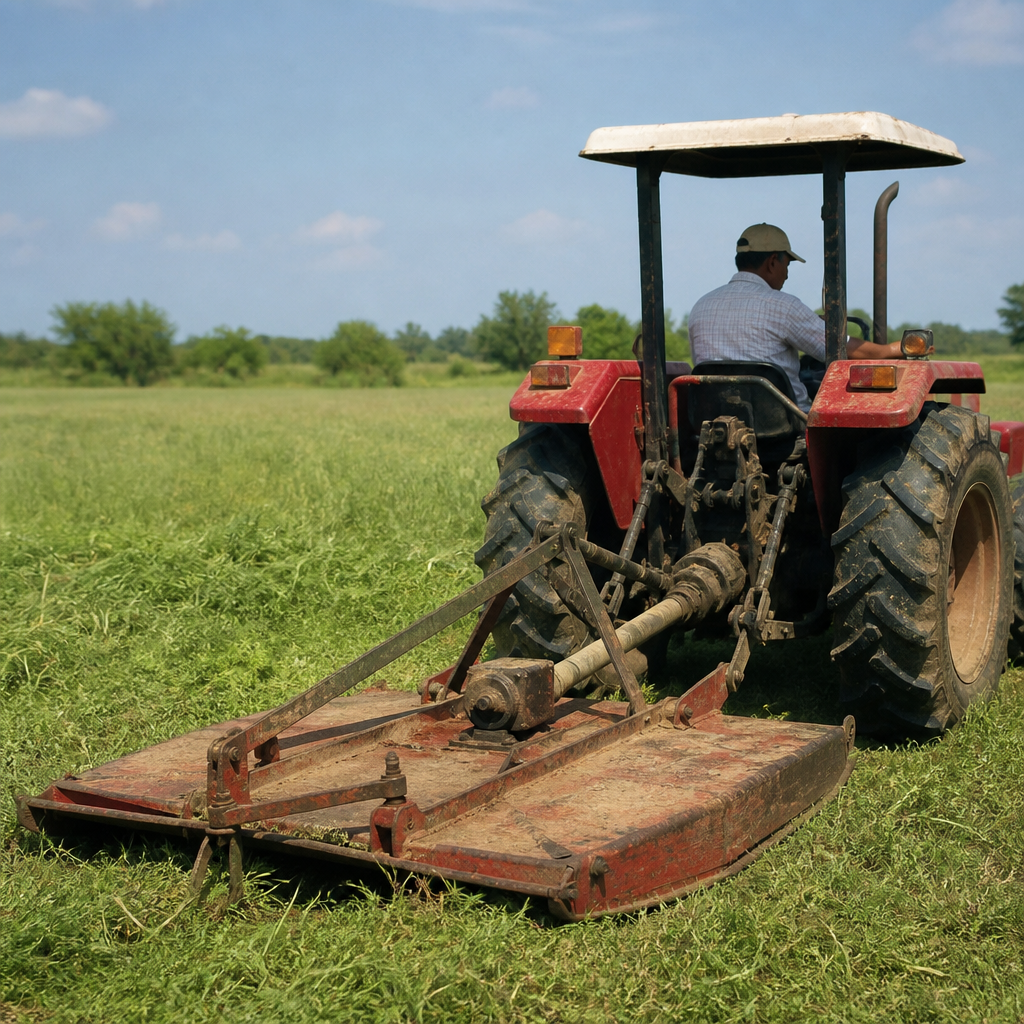
Managing overgrown fields, roadside vegetation, and rough terrain is a challenge every landowner eventually faces. Whether you’re running a small hobby farm or managing hundreds of acres of pastureland, rotary cutters — commonly known as bush hogs — are among the most indispensable tools in agricultural operations. But with new equipment prices climbing year after year, more farmers and land managers are making a strategic shift: investing in quality used machinery rather than stretching their budgets on brand-new units. This approach isn’t just about saving money — it’s about making smarter, more sustainable decisions for the long-term health of your operation.
Understanding What a Bush Hog Actually Does
The term “bush hog” is often used generically to describe any rotary cutter attachment pulled behind a tractor, though Bush Hog is actually a well-known brand name that has become synonymous with the category. These heavy-duty implements use rotating blades to cut through thick brush, tall grass, saplings, and other dense vegetation that a standard lawn mower simply cannot handle. They are essential for maintaining fence lines, clearing fields after harvest, managing drainage ditches, and keeping pastures productive.
Unlike finish mowers designed for manicured lawns, rotary cutters are built to take punishment. Their robust construction — heavy steel decks, reinforced blade carriers, and durable gearboxes — means that even a well-used unit can deliver years of reliable service when properly maintained. This durability is precisely why the used market for these implements is so active and why buyers can find genuine value in pre-owned equipment.
The Financial Case for Buying Used Agricultural Equipment
New rotary cutters can range from a few thousand dollars for smaller residential models to well over $15,000 for heavy-duty commercial units. For many farmers, especially those just starting out or expanding their operations, that kind of capital expenditure is difficult to justify — particularly when a used unit in good condition can perform the same work at a fraction of the cost.
Depreciation is another factor worth considering. Like most equipment, bush hogs lose a significant portion of their value the moment they leave the dealership. Buying used means someone else has absorbed that initial depreciation hit, leaving you with a functional, field-ready implement at a much more reasonable price point. The savings can then be redirected toward other operational needs — fuel, seed, labor, or additional equipment.
Matching the Right Implement to Your Tractor
One of the most important considerations when purchasing any rotary cutter is compatibility with your existing tractor. Bush hogs are rated by horsepower requirements, and using an undersized tractor with an oversized cutter — or vice versa — can result in poor performance, excessive wear, or even mechanical failure. Before shopping, know your tractor’s PTO horsepower output and the cutting width you need for your specific terrain. A 5-foot cutter might be perfectly adequate for a small property with tight spaces, while a 10-foot or wider unit makes more sense for open pastureland where efficiency matters.
The used market offers a wide variety of sizes and configurations, making it easier to find a unit that matches your exact specifications without paying a premium for features you don’t need. This flexibility is one of the most underappreciated advantages of shopping pre-owned.
What to Inspect Before You Buy
Purchasing used equipment requires a more hands-on evaluation than buying new, but it’s a process that experienced buyers find straightforward once they know what to look for. Start with the gearbox — this is often the most expensive component to repair or replace. Check for oil leaks, listen for unusual noises when the PTO is engaged, and inspect the input shaft for excessive play. A compromised gearbox can turn a bargain into a costly repair project.
Next, examine the deck for cracks, heavy rust, or significant dents that could indicate the unit has been abused or improperly stored. Some surface rust is normal and cosmetic, but structural damage is a red flag. Inspect the blades and blade carriers for wear, and check the slip clutch or shear bolt system, which protects the gearbox from shock loads when the blades strike rocks or stumps. Finally, look at the hitch and lift arms to ensure they are straight and undamaged.
Where to Find Reliable Used Bush Hogs
Finding quality used rotary cutters has become considerably easier in the digital age. Online agricultural equipment marketplaces, local farm auctions, and dealer inventory platforms all offer access to a broad selection of pre-owned implements. For buyers who want a curated, organized browsing experience, dedicated equipment dealers with searchable online inventories are often the most efficient option. If you’re actively searching for used bush hogs for sale, HR Agri Power maintains a regularly updated inventory of pre-owned rotary cutters across multiple brands and configurations, making it straightforward to compare options and find the right fit for your operation.
The Broader Equipment Ecosystem: Tractors and Beyond
A bush hog is only as effective as the tractor pulling it, which is why many farmers approach equipment purchases holistically. If you’re in the market for a new or used tractor to pair with your rotary cutter, it’s worth researching the full range of available options — from compact utility tractors to full-size row crop machines. Understanding the capabilities and limitations of different tractor classes helps you make a more informed decision about which implements are appropriate for your setup. For those also considering commercial vehicles to support their agricultural operations, resources like this guide on top-rated commercial trucks can provide useful context for building out a well-rounded fleet.
Staying Current with Agricultural Technology Trends
The agricultural equipment industry continues to evolve rapidly. From GPS-guided precision implements to smart hydraulic systems and telematics-enabled tractors, technology is reshaping how farms operate. While used equipment may not always include the latest innovations, understanding where the industry is heading helps buyers make more informed decisions about which features are worth prioritizing. Industry events and trade shows remain valuable venues for staying current — as highlighted in coverage of new tractors, smart tech, and top brands at spring farm machinery shows, manufacturers are continuously pushing the boundaries of what agricultural equipment can do.
HR Agri Power: A Trusted Source for Pre-Owned Farm Implements
When it comes to sourcing used agricultural equipment, working with a reputable dealer makes a meaningful difference. HR Agri Power has built a reputation for offering a well-organized, transparent inventory of pre-owned farm implements, including rotary cutters from leading manufacturers. Their platform allows buyers to filter by category, condition, and model, reducing the time spent searching and increasing confidence in the purchasing process. For farmers who value efficiency and reliability, having access to a trusted dealer with a broad selection is an asset that simplifies one of the more complex decisions in farm management.
Conclusion: Smart Equipment Decisions Start with the Right Information
Buying a used bush hog is not a compromise — it’s a calculated decision that reflects a clear-eyed understanding of value, durability, and operational needs. With the right inspection process, a clear sense of your tractor’s capabilities, and access to a reliable inventory, farmers can acquire high-performing rotary cutters at prices that make genuine financial sense. As equipment costs continue to rise and agricultural margins remain tight, the ability to source quality used implements efficiently is becoming an increasingly important competitive advantage for operations of every size.
