People all over the world search for “emigrate or immigrate” because these two words look similar, sound formal, and often appear in news, visas, jobs, and study-related content. Yet, they are used differently—and using the wrong one can change the meaning of a sentence completely. Many writers, students, and even professionals mix them up, especially when writing applications, emails, or articles about moving abroad.
The confusion usually comes from perspective. Both words talk about moving from one country to another, but each focuses on a different direction of movement. If you don’t know from where or to where the action is seen, choosing the right word becomes tricky. That’s why people often pause mid-sentence and wonder: Is it emigrate or immigrate?
This article solves that confusion once and for all. You’ll get a quick answer, clear examples, simple rules, and real-life usage. We’ll also look at word origins, British vs American usage, common mistakes, Google Trends insights, and FAQs. By the end, you’ll know exactly which word to use—and why—without second-guessing yourself again.
Emigrate or Immigrate – Quick Answer
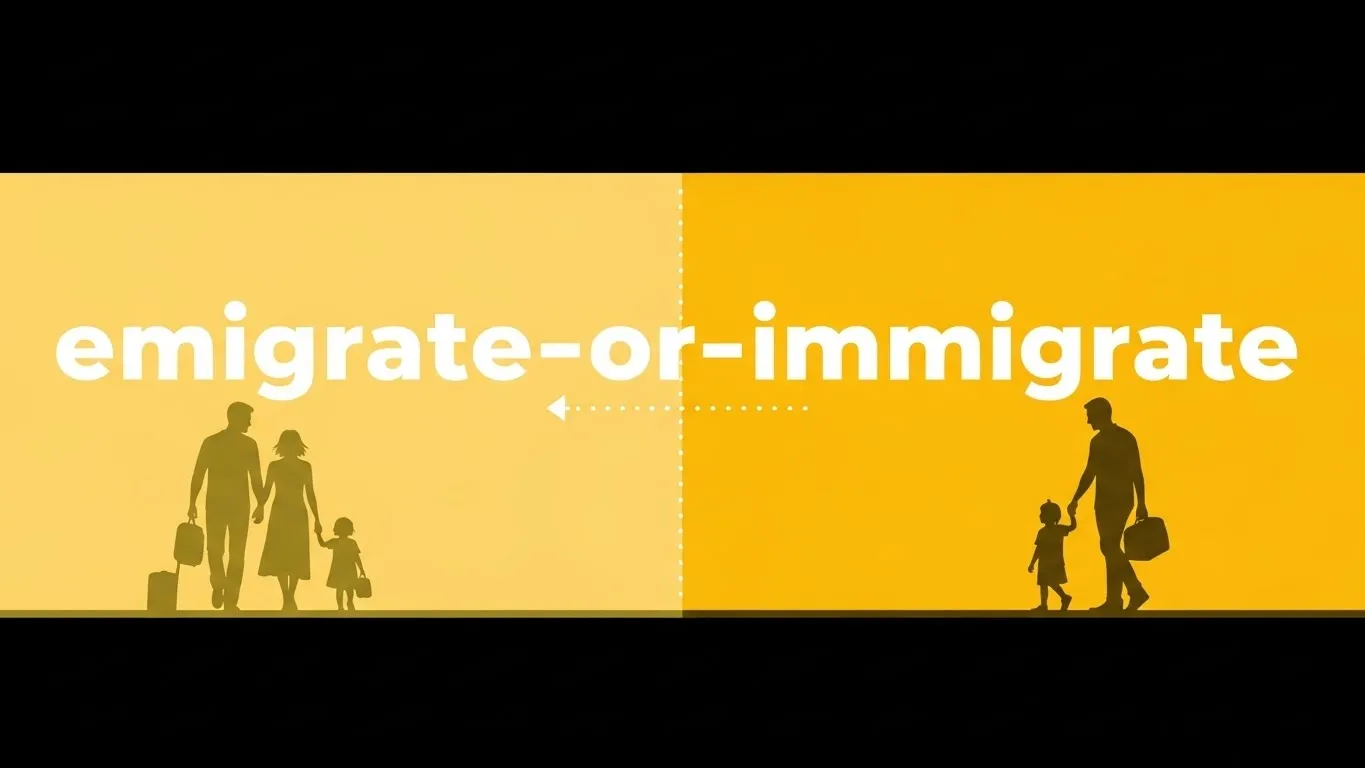
Emigrate means to leave your home country to live in another country.
Immigrate means to come into a new country to live there.
Easy rule:
- Emigrate = Exit a country
- Immigrate = Enter a country
Examples:
- She emigrated from Pakistan in 2015.
- He immigrated to Canada for work.
- Millions emigrate from developing nations each year.
- The country welcomes skilled immigrants.
The Origin of Emigrate or Immigrate
Both words come from Latin, which explains why they look and sound similar.
- Emigrate comes from emigrare
- e- = out
- migrare = to move
- Immigrate comes from immigrare
- in- = into
- migrare = to move
Historically, English adopted both words in the 18th century when global travel and settlement increased. The spelling differences exist because of the Latin prefixes in (into) and e (out of). Over time, English kept both forms to clearly show direction.
British English vs American English Spelling
Good news: There is no spelling difference between British and American English for these words.
Both varieties use:
- Emigrate
- Immigrate
- Emigration
- Immigration
The only difference is context, not spelling.
Comparison Table: British vs American Usage
| Aspect | British English | American English |
| Spelling | Same | Same |
| Usage focus | Formal & policy | Media & law |
| Common phrase | Emigrate from UK | Immigrate to USA |
| Grammar rules | Same | Same |
Which Spelling Should You Use?
The choice depends on perspective, not region.
- For US audiences:
Use immigrate when talking about people coming to the US. - For UK/Commonwealth audiences:
Use emigrate when focusing on people leaving their country. - For global or neutral writing:
Choose based on sentence direction:- Leaving a country → emigrate
- Entering a country → immigrate
Tip:
If you can add “from”, use emigrate.
If you can add “to”, use immigrate.
Common Mistakes with Emigrate or Immigrate
Here are frequent errors people make:
- Using them interchangeably
❌ He emigrated to Canada
✅ He immigrated to Canada - Wrong prepositions
❌ Emigrate to
✅ Emigrate from - Confusing with “migrate”
Migrate is broader and can refer to animals or internal movement. - Wrong noun form
❌ Immigration from a country
✅ Emigration from a country
Emigrate or Immigrate in Everyday Examples
Emails
- “I plan to emigrate from my home country next year.”
- “She hopes to immigrate to Australia soon.”
News
- “Thousands emigrate from rural areas annually.”
- “The country tightened immigration laws.”
Social Media
- “Thinking of immigrating to Germany 🇩🇪”
- “Why do so many people emigrate for jobs?”
Formal Writing
- “Economic instability forces citizens to emigrate.”
- “The government revised its immigration policy.”
Emigrate or Immigrate – Google Trends & Usage Data
Search data shows that:
- “Immigrate” is searched more in:
- USA
- Canada
- Australia
- “Emigrate” is searched more in:
- UK
- India
- Pakistan
- South Africa
This reflects perspective. Countries receiving people focus on immigration, while countries people leave focus on emigration. In news and legal contexts, immigrate dominates, while academic and global discussions often use emigrate.
Comparison Table: Emigrate vs Immigrate
| Feature | Emigrate | Immigrate |
| Meaning | Leave a country | Enter a country |
| Direction | Out | In |
| Common preposition | From | To |
| Focus | Origin country | Destination country |
| Example | Emigrate from India | Immigrate to UK |
FAQs: Emigrate or Immigrate
1. Can I use emigrate and immigrate together?
Yes. Example: She emigrated from France and immigrated to Canada.
2. Which word is more common?
Immigrate is more common in media and law.
3. Is migrate the same as emigrate?
No. Migrate is broader and less specific.
4. What is the noun form of emigrate?
Emigration.
5. What is the noun form of immigrate?
Immigration.
6. Do British and American English differ here?
No. Spelling and rules are the same.
7. How can I remember the difference?
E = Exit (emigrate), I = In (immigrate).
Conclusion
Understanding the difference between emigrate or immigrate is easier than it first appears. Both words describe moving between countries, but each tells the story from a different side. Emigrate looks at the act of leaving one’s homeland, while immigrate focuses on arriving in a new country. Once you remember this change in perspective, the confusion disappears.
For students, writers, journalists, and professionals, using the correct term adds clarity and credibility. It also helps in formal writing, visa applications, academic papers, and SEO-focused content. There is no British or American spelling difference to worry about—only direction and context matter.
If your sentence talks about leaving, choose emigrate. If it talks about entering, choose immigrate. With the examples, tables, and rules shared in this guide, you can now use both words confidently in everyday and professional writing without hesitation.
Bearer or Barer: Which Spelling Is Correct and When to Use It?

I’m Emily K. Dawson, and I write about commonly confused English words and spelling mistakes. My goal is to make English easier for learners by explaining grammar in a simple, practical way.