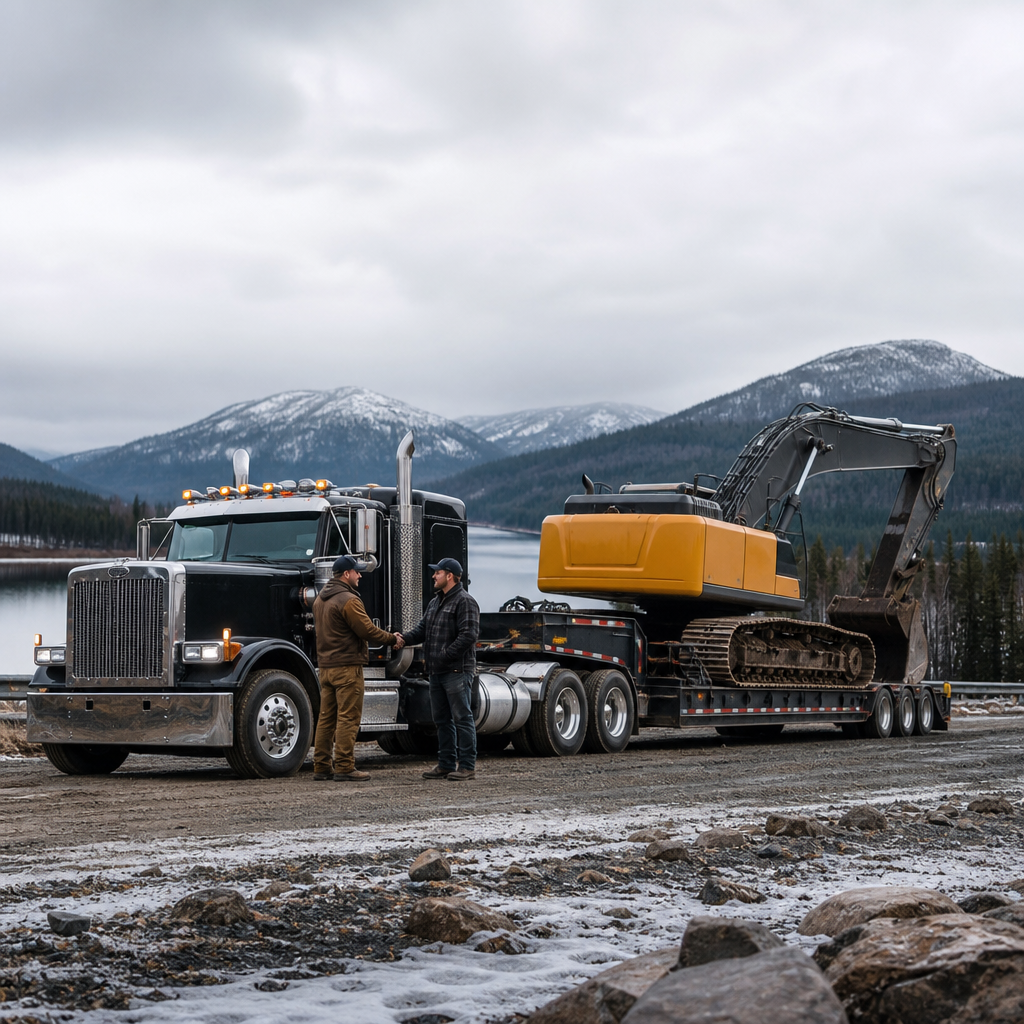
Moving heavy machinery across rural terrain is never a simple undertaking. Whether it involves excavators, bulldozers, cranes, or agricultural equipment, the logistics of transporting oversized loads demand a level of precision, planning, and trust that goes far beyond what standard freight services can offer. In regions like western Maine, where road conditions, seasonal restrictions, and remote job sites add layers of complexity, the difference between a smooth delivery and a costly delay often comes down to one thing: the quality of the relationship between the client and the transport provider.
The Unique Challenges of Heavy Equipment Logistics in Rural Regions
Rural logistics is a discipline unto itself. Unlike urban freight corridors where infrastructure is dense and alternatives are plentiful, rural transport routes often offer limited flexibility. A single bridge weight restriction or a seasonal road closure can force a complete rerouting of an entire haul, adding hours and significant cost to an operation. For industries like construction, forestry, and agriculture that depend on heavy machinery arriving on time and in working condition, these variables are not minor inconveniences — they are operational risks that must be managed proactively.
Western Maine presents a particularly demanding environment. The region’s terrain is rugged, its winters are severe, and many of the roads connecting job sites to main highways were not designed with oversized loads in mind. Navigating this landscape requires local knowledge, proper permitting expertise, and equipment capable of handling the demands of the route. A transport provider without deep familiarity with the area is not just less efficient — they are a liability.
Permitting, Compliance, and the Cost of Getting It Wrong
One of the most overlooked aspects of heavy equipment transport is the permitting process. Oversized loads require state-issued permits that specify approved routes, travel windows, and escort requirements. In Maine, these regulations are enforced seriously, and non-compliance can result in fines, load seizures, and project shutdowns. Experienced transport providers handle permitting as a core part of their service — not an afterthought. They know which routes are approved for which load dimensions, when seasonal restrictions apply, and how to coordinate with state agencies to keep a project on schedule.
How Strong Logistics Relationships Drive Project Outcomes
The logistics industry has long understood that transactional relationships produce transactional results. When a client treats a transport provider as a commodity — selecting purely on price — they often sacrifice the communication, flexibility, and accountability that make complex hauls successful. Conversely, when both parties invest in a genuine working relationship, the outcomes improve measurably. According to research on how strong partnerships drive success in logistics, companies that prioritize relationship-building with their service providers consistently outperform those that do not, particularly in high-stakes, time-sensitive operations.
This dynamic is especially relevant in heavy equipment transport, where last-minute changes are common and the margin for error is narrow. A transport provider who knows your equipment, understands your project timelines, and has a history of delivering under pressure is an asset that cannot be replicated by the lowest bidder on a freight marketplace. Trust, built over time through consistent performance, is the foundation of every successful heavy haul operation.
Communication as a Competitive Advantage
Modern logistics clients expect more than a truck that shows up on time. They expect real-time updates, proactive problem-solving, and a point of contact who can answer questions without delay. As digital infrastructure continues to evolve, these expectations are rising rapidly. Understanding how faster networks are transforming customer expectations helps explain why logistics providers who invest in communication technology and responsive service models are pulling ahead of competitors who rely on outdated practices. In heavy equipment transport, where a delayed update can cascade into a missed construction window or an idle crew, communication is not a soft skill — it is a core operational requirement.
What to Look for in a Heavy Equipment Transport Provider
Selecting the right transport partner for heavy machinery requires evaluating several factors that go beyond price and availability. Equipment capacity is an obvious starting point — the provider must have the right trailers, trucks, and rigging to handle your specific load. But equally important are factors like insurance coverage, safety record, driver experience with oversized loads, and familiarity with the specific region where transport will occur.
References matter enormously in this industry. A provider with a long track record of successful hauls in your region has demonstrated the ability to navigate the variables that matter most. Ask about their experience with similar equipment, their process for handling unexpected route changes, and how they manage communication throughout a haul. The answers will tell you more than any rate sheet.
Seasonal Considerations in Maine Heavy Hauling
Maine’s climate introduces a seasonal dimension to heavy equipment transport that providers in milder regions rarely contend with. Spring weight restrictions, commonly known as “mud season” restrictions, limit the loads that can travel on certain roads during the thaw period. Winter conditions require specialized equipment, careful route planning, and experienced drivers who understand how ice and snow affect load stability. Planning transport around these seasonal realities is not optional — it is essential to protecting both the equipment being hauled and the infrastructure it travels on.
Bear Down Logistics: Serving Farmington and Western Maine
For construction companies, contractors, and equipment owners operating in the Farmington area, finding a transport partner with genuine regional expertise is critical. Bear Down Logistics has built its reputation on exactly that — deep knowledge of western Maine’s roads, regulations, and operational demands, combined with a commitment to client communication that sets them apart from national freight brokers. Providing reliable heavy equipment transport in Farmington, Bear Down Logistics brings the local expertise and professional accountability that complex hauls require, ensuring your machinery arrives safely, on schedule, and in full compliance with state regulations.
Their team understands that every piece of equipment represents a significant investment and that delays translate directly into project costs. That understanding drives a service model built around reliability, transparency, and the kind of responsive communication that modern clients expect.
Conclusion: Invest in the Right Partner, Not Just the Lowest Rate
Heavy equipment transport in rural Maine is not a commodity service. It is a specialized discipline that demands local knowledge, regulatory expertise, proper equipment, and a genuine commitment to client outcomes. The providers who excel in this space are not necessarily the cheapest — they are the most reliable, the most communicative, and the most deeply embedded in the regional logistics landscape they serve. For businesses operating in and around Farmington, choosing a transport partner with proven experience in western Maine is not just a smart decision — it is the foundation of every successful project that depends on getting the right equipment to the right place at the right time.
